



 PDF
 Citation
 Print


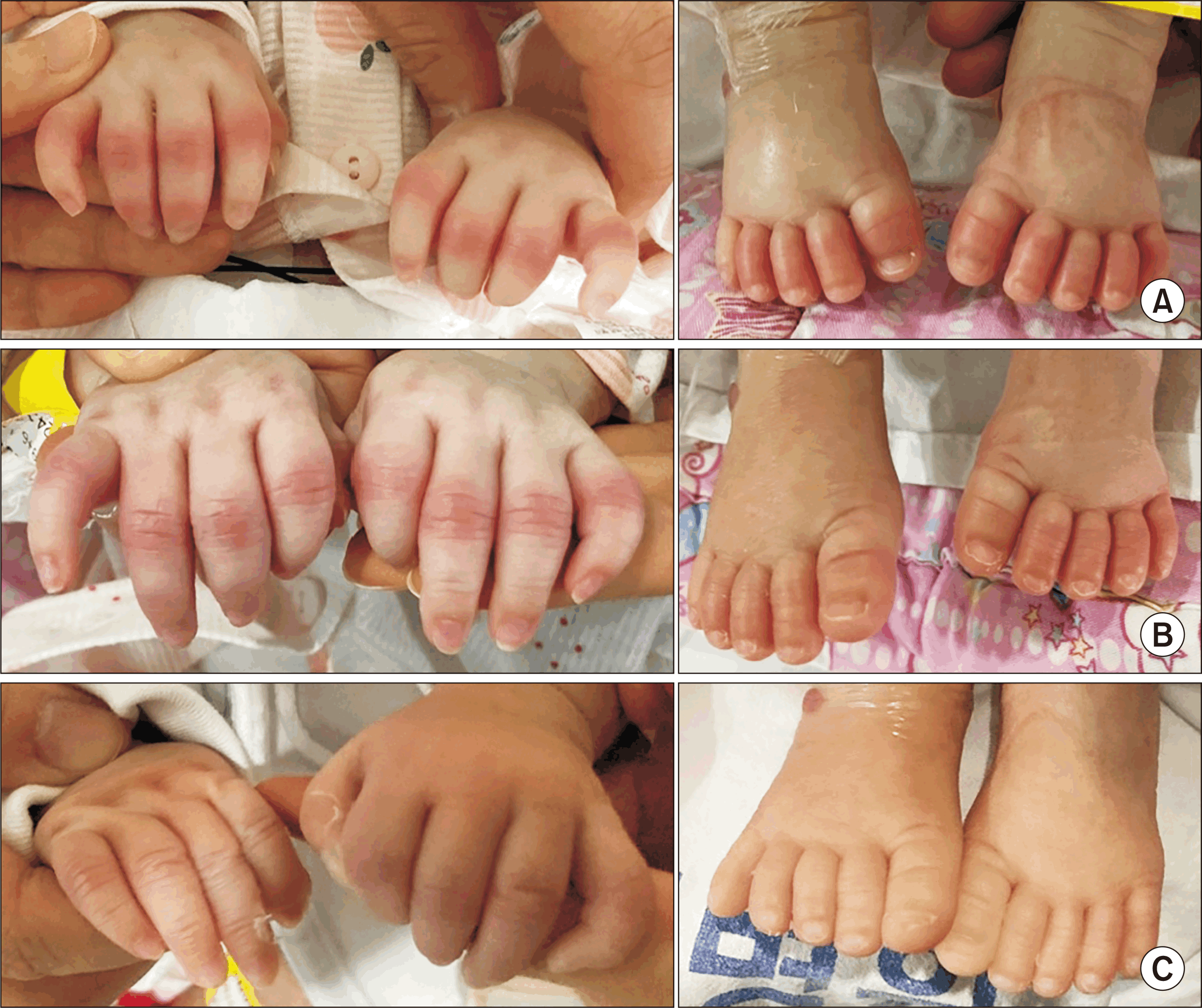
A female infant born prematurely at 28 weeks of gestation, weighing 970 grams at birth, underwent an ileostomy at 18 days after birth due to necrotizing enterocolitis (NEC). Two months after the ileostomy, she underwent elective ileostomy reversal surgery. Following the surgery, she developed fever and elevated inflammatory markers, with C-reactive protein (CRP) rising to 5.98 mg/dL. Empirical intravenous antibiotics, including vancomycin and meropenem, were initiated. On postoperative day 3, although her fever had subsided, her CRP continued to rise, reaching 11.16 mg/dL. She subsequently developed sudden-onset swelling and erythema of both fingers and toes (Figure 1A). The involvement was symmetrical and affected multiple small joints of the hands and feet.
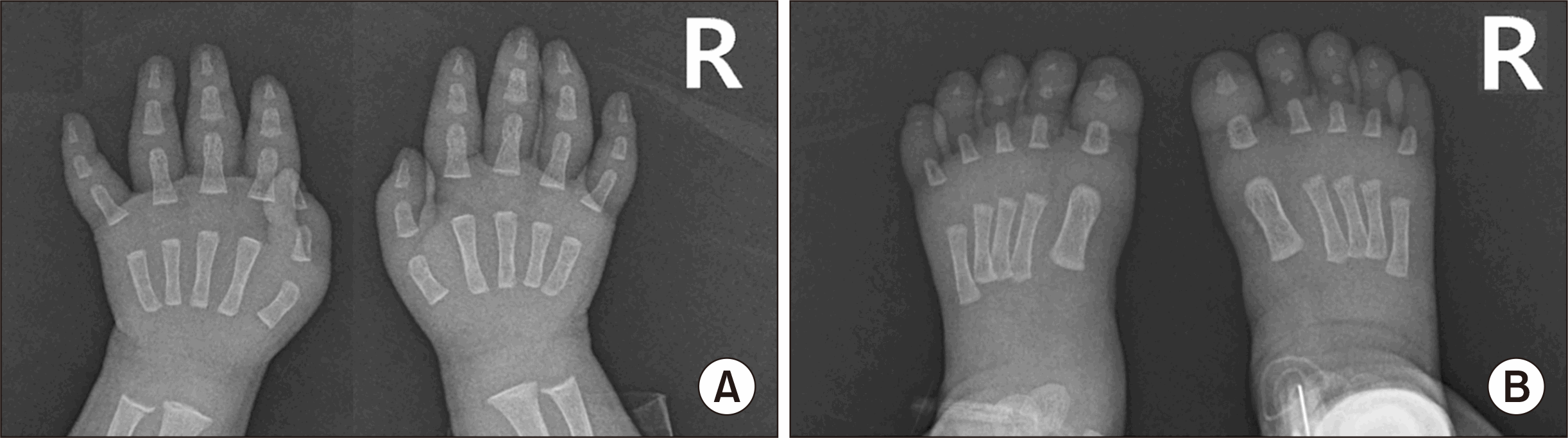
In addition to the visible swelling, the infant showed significant resistance to passive joint movements. Marked irritability and discomfort were noted during passive extension of both knees and elbows, as well as during movement of both shoulders, suggesting polyarthritis involving both small and large joints. Despite these symptoms, her vital signs remained stable, and she was afebrile. There were no signs of skin rash, conjunctival injection, or lymphadenopathy. Autoimmune antibodies, including rheumatoid factor, antinuclear antibody, anti-cyclic citrullinated peptide antibody, and HLA-B27, were negative. Blood cultures were also negative. Radiographs demonstrated diffuse soft tissue swelling in the hands and feet without joint space narrowing, periosteal reaction, or bone destruction (Figure 2). There was no family history of autoimmune diseases. This study was approved by the Institutional Review Board (IRB) of Ulsan University Hospital (IRB no. UUH 2025-04-019). Written informed consent was obtained from the participant’s legal guardians.
Given the absence of infection, trauma, or underlying autoimmune disease, a diagnosis of transient sterile polyarthritis—also known as transient synovitis—was considered [1]. Intravenous methylprednisolone (mPD) was initiated at a dose of 0.5 mg/kg once daily. The patient showed gradual improvement in joint swelling and erythema (Figure 1B). By day 4 of mPD treatment, the CRP level had decreased to 2.58 mg/dL, and the mPD dose was reduced to 0.25 mg/kg once daily. As there was no clinical worsening and the CRP level had normalized, the mPD dose was tapered to 0.13 mg/kg once daily on day 8. By day 11, the arthritis had nearly been resolved, with no recurrence of symptoms and CRP remaining within the normal range (Figure 1C). Intravenous mPD was discontinued after a total of 11 days of treatment. The patient remained clinically stable without recurrence of arthritis during 2 months of follow-up after steroid discontinuation. We will continue to monitor for any recurrence or related symptoms to ensure timely management if necessary.
This case represents a rare presentation of transient, sterile polyarthritis occurring in the early postoperative period following intestinal reanastomosis in a premature infant. Although the exact mechanism remains unclear, it is hypothesized that immune dysregulation, possibly related to the gut–immune axis, may be triggered by altered intestinal integrity, systemic inflammatory responses, or exposure to gut antigens following NEC and surgical reanastomosis [2,3]. Comparable immune-mediated arthritic reactions have been documented in other contexts involving intestinal inflammation, such as reactive arthritis or enteropathic arthritis [1,4,5]; however, reports in neonates or premature infants are exceedingly rare.
Recognition of this self-limited, immune-mediated arthritis is important to prevent unnecessary use of broad-spectrum antibiotics, invasive procedures, or surgical intervention. Prompt diagnosis, supported by careful clinical evaluation and imaging, along with timely initiation of anti-inflammatory therapy such as corticosteroids, can lead to favorable outcomes. This case underscores the need for awareness among neonatologists and pediatric rheumatologists of this unusual but treatable postoperative complication.
 XML Download