



 PDF
 Citation
 Print


I. Introduction
Temporomandibular disorders (TMDs) comprise a diverse group of musculoskeletal and neuromuscular conditions that affect the temporomandibular joint (TMJ), masticatory muscles, and related supporting structures. They are among the most prevalent causes of non-dental orofacial pain, affecting 5%-12% of the general population, with a higher incidence in women between 20 and 40 years of age1,2. Common clinical manifestations include TMJ pain, joint sounds, restricted mandibular movements, and functional impairment, which can significantly affect quality of life3.
The aetiology of TMD is multifactorial, encompassing structural, functional, and psychosocial components. Occlusal discrepancies, parafunctional habits, psychosocial stress, and genetic predispositions have all been implicated4,5. Within orthodontics, one of the most debated factors is the role of premolar extraction during comprehensive treatment planning. Historically, extraction therapy was proposed as a means to alleviate crowding and correct malocclusions; however, concerns have been raised regarding its potential association with TMD onset or aggravation6.
Evidence on this association remains inconclusive. Some studies suggest that extraction may predispose patients to altered occlusal relationships, mandibular retrusion, or changes in condylar position, thereby contributing to TMJ dysfunction7,8. Conversely, other investigations report no significant link between extraction-based orthodontic treatment and the development or progression of TMD9,10. This divergence of findings has fuelled ongoing controversy and clinical uncertainty. Although the orthodontic extraction debate often focuses on premolar removal, the currently available clinical evidence linking extraction to TMJ pain largely arises from third molar extraction studies. Therefore, conclusions must primarily be interpreted within the context of third molar removal rather than orthodontic premolar extraction.
Considering the high prevalence of TMD and its significant effect on patient quality of life, it is clinically important to determine whether extraction therapy has any impact on TMJ health. While orthodontic premolar extraction has historically been debated in relation to TMDs, much of the available empirical evidence instead arises from studies evaluating third molar extraction. These procedures differ substantially in indication, biomechanics, surgical trauma, and postoperative course. Recognizing this distinction is essential to ensure that conclusions remain aligned with the underlying evidence base.
This systematic review aims to critically evaluate the relationship between extraction and non-extraction orthodontic approaches and the development or worsening of TMJ pain, with the goal of guiding evidence-based orthodontic and prosthodontic decision-making.
II. Methodology
1. Protocol and registration
This systematic review was conducted in accordance with the Preferred Reporting Items for Systematic Reviews and Meta-Analyses (PRISMA) 2020 guidelines11.(Appendix 1) The review protocol was registered prospectively in the International Prospective Register of Systematic Reviews (PROSPERO, CRD420250655883).
2. Eligibility criteria
Third molar extraction studies were included because they represent the largest available body of evidence examining extraction-related TMJ outcomes. Studies limited to surgical management of TMJ disorders were excluded to isolate the effect of dental extraction on TMJ pain. Case reports and case series were excluded due to their inability to support comparative inference.
3. Inclusion criteria
Studies evaluating third molar extraction or other extractions where TMJ pain/TMD outcomes were assessed (short-term morbidity or long-term diagnosis). Comparator can be no extraction, pre-extraction baseline, or non-extraction controls.
4. Exclusion criteria
Studies were excluded if they primarily evaluated surgical management of TMDs such as arthrocentesis, arthroscopy, open joint procedures, or TMJ replacement because these interventions do not isolate the effect of dental extraction on TMJ pain. In addition, case reports and case series were excluded due to the absence of a comparator group and their limited ability to support causal or comparative inference. Finally, studies that did not report TMJ/TMD-related outcomes (e.g., TMJ pain, joint sounds, mandibular function measures, validated research diagnostic criteria for temporomandibular disorders (RDC/TMD) or diagnostic criteria for temporomandibular disorders (DC/TMD) diagnosis, or patient-reported symptom outcomes) were excluded, as they were not relevant to the review objectives.
5. Information sources and search strategy
A comprehensive electronic search was conducted across the following databases: PubMed/MEDLINE, Cochrane Library, Scopus (Elsevier), Web of Science (Clarivate), and ScienceDirect (Elsevier). Additional searches included Google Scholar (for gray literature), ClinicalTrials.gov, and the Clinical Trials Registry–India (CTRI). Searches covered literature published up to August 2025, with no language restrictions.
The search strategy combined controlled vocabulary (MeSH) and free-text terms such as: “temporomandibular joint pain,” “TMD,” “extraction,” “tooth extraction,” “premolar extraction,” “orthodontics,” “non-extraction,” “occlusal therapy,” “facial pain.” Boolean operators (“AND,” “OR”), truncation, and database-specific filters were applied. The complete search strategy will be provided in the supplementary materials.
6. Study selection
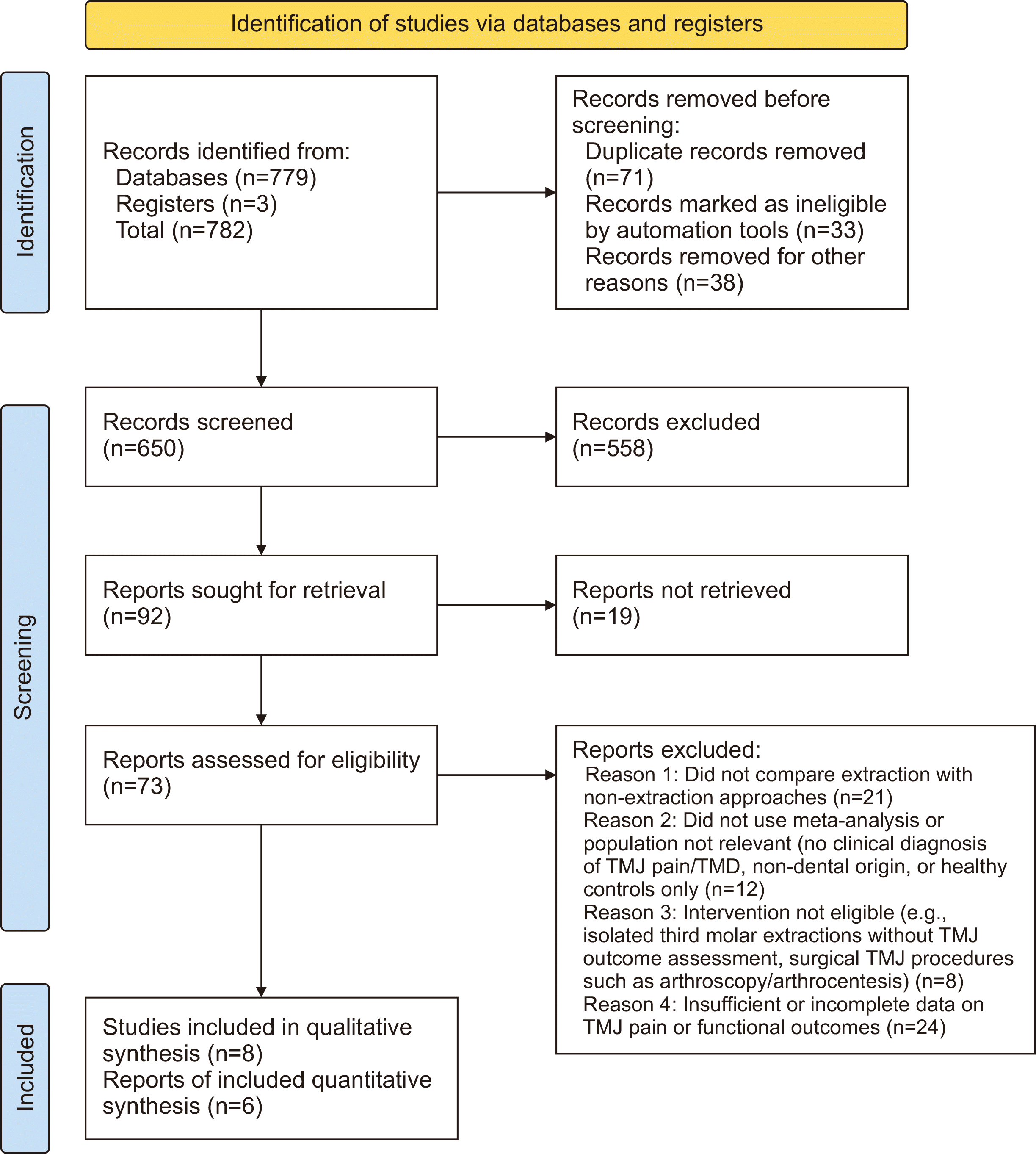
All retrieved records were exported into Zotero and screened for duplicates. Two independent reviewers (P.A. and R.D.) performed a two-stage screening: (1) Title and abstract review to identify potentially relevant studies, and (2) full-text review to confirm eligibility based on predefined inclusion/exclusion criteria. Discrepancies were resolved by consensus or arbitration from a third reviewer (B.B.).(Fig. 1) The complete electronic search strategies for all databases, including search terms, Boolean operators, and limits, are provided in Appendix 2.
7. Data extraction
Data were extracted independently by two reviewers using a pre-piloted extraction form to ensure consistency and accuracy. The extracted information included bibliographic details such as author, year, country, and journal, along with study design and methodology. Sample characteristics were recorded, including size, age, sex distribution, and diagnostic criteria. Details of the interventions, such as type of extraction, orthodontic protocol, and appliances used, were documented alongside comparator approaches, which included non-extraction techniques and conservative management strategies. Outcomes assessed encompassed pain scores, functional measures, patient-reported outcomes, occlusal or morphological changes, treatment stability, and any reported adverse effects. Follow-up duration and key findings, including effect sizes, confidence intervals, and P-values, were also collected. Any disagreements during the extraction process were resolved through discussion, with arbitration by a third reviewer when necessary.
8. Risk of bias (RoB) and quality assessment
The methodological quality of the included studies was independently assessed by two reviewers using validated tools. The Risk of Bias 2.0 (RoB 2.0; Cochrane) tool was applied for randomized controlled trials (RCTs), the Risk of Bias In Non-Randomized Studies - of Interventions (ROBINS-I) tool (Cochrane) was used for non-randomized studies, and the Newcastle–Ottawa Scale (NOS) was employed for observational studies12,13. Any discrepancies between reviewers were resolved through consensus14. In addition, the overall certainty of evidence across outcomes was evaluated using the Grading of Recommendations, Assessment, Development and Evaluations (GRADE) approach15.(Table 1)
9. Data synthesis
A qualitative synthesis (narrative review) will be provided for all included studies, organized by intervention type and outcome domain. If sufficient homogeneity in design and outcomes is observed, a quantitative meta-analysis will be performed using RevMan Web (Cochrane).
For continuous outcomes (e.g., pain scores, maximum mouth opening), mean differences (MDs) or standardized mean differences (SMDs) with 95% confidence intervals (CIs) will be calculated. For dichotomous outcomes (e.g., presence of joint sounds), risk ratios (RRs) with 95% CI will be used. A random-effects model will be applied to account for heterogeneity. To ensure consistent directionality, outcomes were coded such that effect estimates <1 favored extraction only when the outcome represented persistence/presence of TMJ pain/TMD symptoms. When studies reported symptom improvement (e.g., responders), effect direction was inverted as required (1/RR or 1/odds ratio [OR]) to maintain a common interpretation. Where transformation was not possible due to reporting limitations, studies were summarized narratively.
10. Assessment of heterogeneity and publication bias
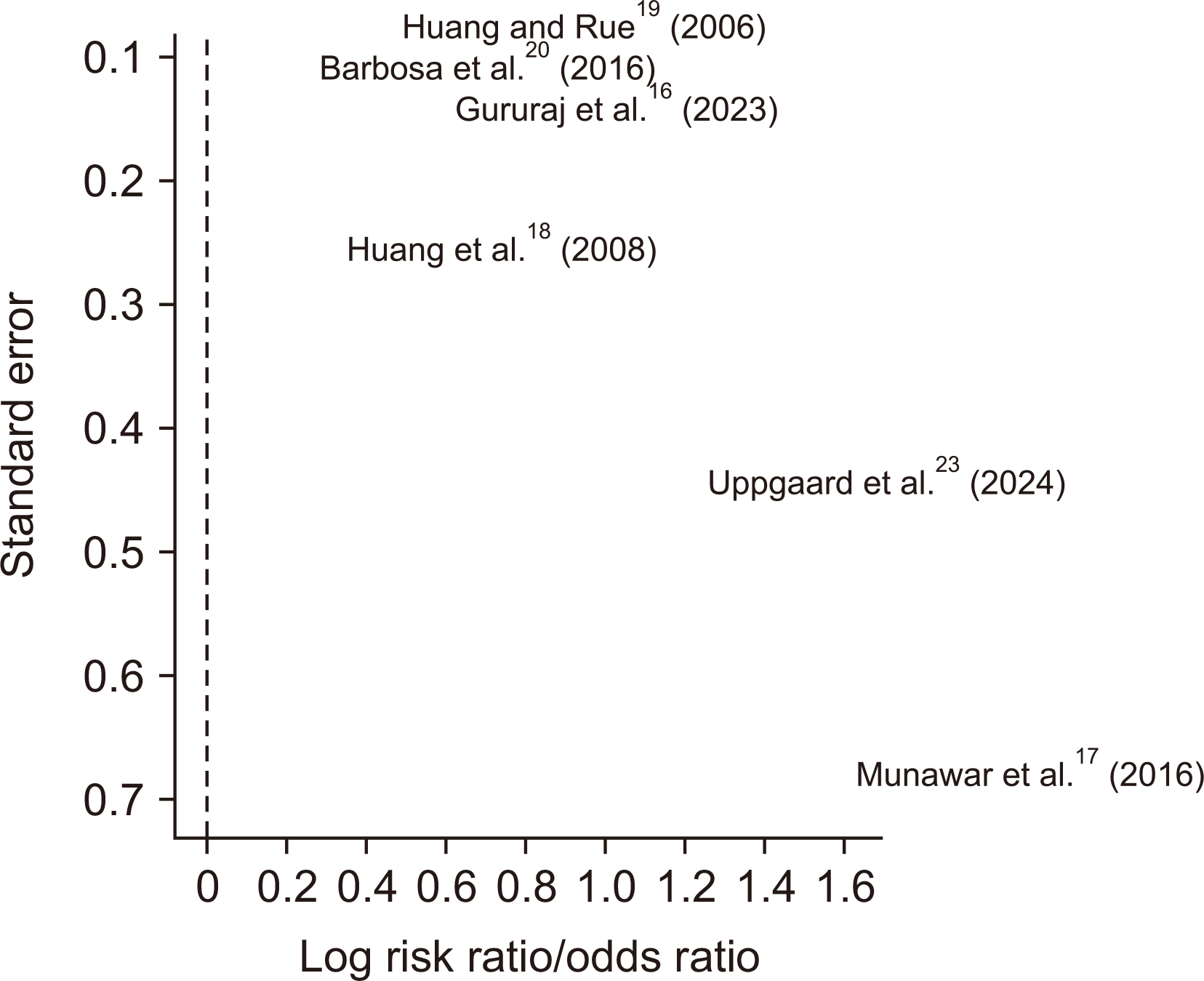
Heterogeneity will be assessed using the chi-square test (P<0.10 indicating significance) and quantified with the I2 statistic. Substantial heterogeneity (I2>50%) will be further explored using subgroup analyses based on age group, type of extraction, type of non-extraction intervention, and duration of follow-up. Sensitivity analyses will be conducted by excluding high RoB studies. Publication bias will be evaluated using funnel plots and Egger’s test if ≥10 studies are included in the meta-analysis.(Fig. 2)
III. Results
1. Study selection
A total of eight studies met the eligibility criteria and were included in this review. The designs comprised two RCTs16, one prospective cohort study17, two retrospective/matched cohort studies18,19, two cross-sectional studies20,21, and one systematic review16,17,22. Sample sizes ranged from 42 participants to over 34,000 individuals17-21. Follow-up durations varied from baseline-only cross-sectional assessments to a maximum of six years in longitudinal cohorts. Study characteristics are summarized in Table 2.
3. Interventions and comparators
Of the eight included studies, six primarily evaluated third molar extraction, one assessed therapeutic extraction of supraerupted maxillary third molars in TMD patients, and no randomized trials specifically evaluated orthodontic premolar extraction, with comparators being either non-extracted individuals18,19 or no surgical intervention17. One RCT specifically evaluated the role of extraction of supraerupted/distoverted maxillary molars in TMD patients as part of multiphase therapy16. Another RCT compared mandibular support methods during extraction (device vs. manual), indirectly addressing iatrogenic TMJ loading.
4. Pain outcomes
Several studies assessed TMJ pain following extraction. Gururaj et al.16 reported a 96% reduction in pain symptoms in patients undergoing extraction of supraerupted/distoverted molars compared with non-extraction therapy (P<0.05). Conversely, Munawar et al.17 observed short-term increases in pain after mandibular third molar surgery, with myofascial pain present in 69% of cases at 1 week; some cases persisted up to 6 months (P<0.005). Large-scale cohort data were more equivocal: Huang et al.18 found a non-significant increase in TMD incidence post-extraction (RR 1.4, 95% CI 0.9-2.2), while Huang and Rue19 demonstrated a significant association, with an adjusted RR of 1.6 (95% CI 1.3-2.0), suggesting that approximately 23% of TMD cases could be attributable to extraction18,19. Barbosa et al.20 further supported a link, with ORs ranging from 1.30 to 2.15 across diagnostic subgroups (P=0.041-0.006).
5. Functional outcomes
Functional improvements were most evident in the RCT by Gururaj et al.16, where extraction led to significant reductions in joint clicking, headache, and neck pain. In contrast, Munawar et al.17 found early postoperative functional limitations, with trismus observed in 92% of surgical cases at 1 week, though most symptoms diminished over time. Uppgaard et al.23 reported no significant difference in functional outcomes between extraction performed with device-assisted mandibular support vs. manual support, though fully impacted molars predicted higher postoperative pain (OR 3.44; P=0.004).(Table 3)
6. Patient-reported outcomes
Evidence for quality of life and patient satisfaction was limited. Gururaj et al.16 noted improved patient satisfaction in the extraction group, correlating with reduced pain and symptoms. Barbosa et al.20, however, reported that students with a history of third molar removal had higher odds of reporting TMD symptoms, indicating a potential negative patient-reported outcome in community populations.
7. Morphological and occlusal outcomes
Cohort studies by Huang and collegues18,19 did not demonstrate major long-term occlusal or morphological changes attributable to extraction, although short-term shifts in condylar loading or position could not be excluded. Imaging-based outcomes (radiographs/insurance diagnostic codes) did not show consistent patterns linking extraction with structural TMJ alterations.
8. Short-term postoperative TMJ morbidity and longer-term TMJ outcomes
Short-term TMJ morbidity was primarily observed following prophylactic or routine third molar surgery. Prospective and randomized studies reported increased rates of postoperative pain, trismus, and masticatory muscle symptoms in the early weeks after extraction, with symptoms generally decreasing over subsequent follow-up.
Longer-term outcomes assessed incident or persistent TMJ disorders beyond the immediate postoperative period. Population-based cohort studies demonstrated mixed findings, with some reporting a modest increase in TMJ disorder diagnoses after third molar extraction and others showing no statistically significant association.
9. Prophylactic vs. therapeutic extraction contexts
Differences were evident according to extraction intent. Prophylactic third molar removal was more frequently associated with transient postoperative TMJ symptoms, whereas therapeutic extraction in patients with established TMD such as removal of supraerupted or interfering molars was associated with improvement in pain and related symptoms.
10. Third molar vs. orthodontic extraction
The evidence base was dominated by third molar extraction studies, with limited direct evidence addressing orthodontic premolar extraction. Consequently, TMJ outcomes reported in this review largely reflect third-molar–related interventions and cannot be directly extrapolated to orthodontic extraction contexts.
11. Adverse effects
Postoperative complications were primarily reported in surgical cohorts. Munawar et al.17 documented persistent TMD symptoms in a minority of cases up to 6 months post-extraction found no difference in pain outcomes between mandibular support techniques, but highlighted impaction severity as a predictor of adverse events.
12. Evidence synthesis
The systematic review by Damasceno et al.22, which included seven clinical studies, estimated ORs between 1.81 and 2.15 and a RR of approximately 2.1 for TMD after extraction. Six of the seven studies suggested an increased risk, though certainty of evidence was rated low to moderate due to heterogeneity, varied diagnostic criteria, and inconsistent follow-up durations.
13. RoB in cross-sectional studies
The two cross-sectional studies demonstrated variable methodological quality. DeAngelis et al.21 was rated at moderate risk, mainly due to small sample size, absence of non-response reporting, and lack of adjustment for confounding. Although a standardized TMD examination was used, the study design inherently limits causal inference. In contrast, Barbosa et al.20 benefited from a large sample size (n=1,381) and the use of validated RDC/TMD diagnostic criteria. Despite not reporting non-response bias, this study adjusted for key confounders (sex and age) and presented clear findings, resulting in a low-to-moderate risk rating.(Table 4)
14. RoB in cohort studies
Among the cohort studies, Huang et al.18 and Huang and Rue19 both achieved low-to-moderate risk ratings. These large population-based cohorts were strengthened by representative samples, appropriate matching, and adjustment for confounding. However, reliance on insurance registry data introduced potential misclassification of TMD outcomes. Munawar et al.17 was rated as moderate-to-high risk, reflecting its small sample size, limited confounder control, and shorter follow-up, though outcome measurement was based on validated diagnostic criteria with low attrition. In contrast, Uppgaard et al.23, a multisite RCT analyzed in a cohort-like framework, was judged to be at low RoB, with strong sample selection, balanced confounders through randomization, validated outcome measurement, and excellent retention (>95%).(Table 5)
Overall, the cross-sectional studies provided limited evidence due to moderate methodological concerns, particularly with confounding and non-response bias. The larger cohort studies offered more robust data, although registry-based outcome ascertainment may underestimate TMD incidence. Smaller prospective cohorts were more vulnerable to bias, while trial-based cohort data (Uppgaard et al.23) provided the highest methodological rigor. Collectively, the body of evidence is dominated by low-to-moderate quality observational data, with only isolated low-risk studies available, underscoring the need for well-powered prospective research with standardized diagnostic criteria and comprehensive confounder adjustment.
15. Quantitative synthesis
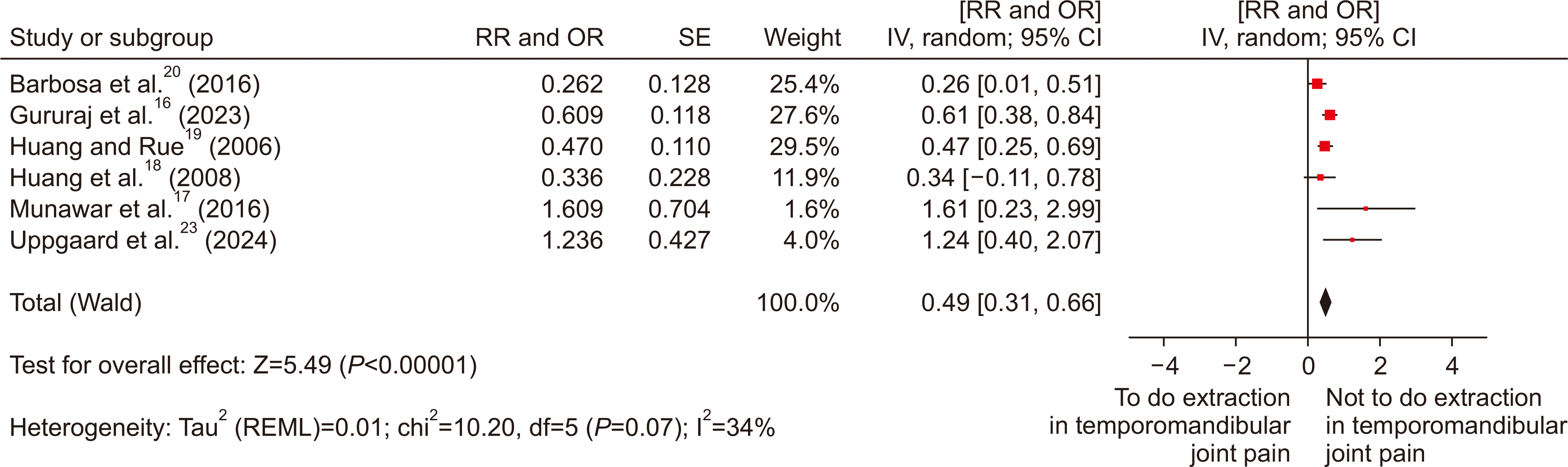
The meta-analysis of six eligible studies yielded a pooled RR/OR of 0.49 (95% CI: 0.31-0.66), favouring predominantly third molar extraction in the management of TMJ pain. This means that, across the included studies, patients who underwent predominantly third molar extraction were about 51% less likely to experience TMJ pain or related symptoms compared with those managed with non-extraction approaches. The result is statistically significant (Z=5.49, P<0.00001). Statistical heterogeneity was moderate (I2=34%), with chI2=10.20 (P=0.07). This suggests some variability in effect sizes between studies, but not enough to invalidate the overall pooled estimate. The REML-derived τ2 was low (0.01), further indicating relative consistency across studies. Despite statistical significance, the overall certainty of evidence for most outcomes was low or moderate primarily due to observational study designs and heterogeneity
Largest contributors to weight were Huang and Rue19 (29.5%), Gururaj et al.16 (27.6%), and Barbosa et al.20 (25.4%), which collectively drove most of the pooled effect. Smaller studies such as Munawar et al.17 carried little weight (<5%), though they added context for postoperative outcomes and procedural variables. Importantly, while Munawar et al.17 suggested a higher short-term risk (RR=5.00), its small sample size and wide confidence interval reduced its influence on the pooled result.(Table 6; Fig. 3)
16. Clinical interpretation
The pooled analysis suggests that extraction predominantly third molar extraction in therapeutic contexts may be associated with reduced TMJ pain, while short-term postoperative morbidity remains common. However, short-term postoperative morbidity remains common (as shown in Munawar et al.17). The moderate heterogeneity highlights that patient selection, type of extraction (therapeutic vs. third molar prophylactic), and outcome definitions may influence findings.
Evidence from this meta-analysis indicates a protective effect of predominantly third molar extractionon TMJ pain outcomes, though results should be interpreted with caution given study heterogeneity, varying diagnostic criteria, and the predominance of observational data. High-quality, extraction-specific RCTs are needed to confirm these findings and establish clearer clinical guidelines.
IV. Discussion
This systematic review and meta-analysis evaluated the association between extraction and TMJ pain. The pooled analysis of six eligible studies demonstrated that extraction was associated with a significantly lower risk of TMJ pain (RR/OR=0.49, 95% CI 0.31-0.66; P<0.00001). Despite moderate heterogeneity (I2=34%), the findings suggest that extraction, particularly when performed in therapeutic contexts, may have a protective role against TMJ-related symptoms.
1. Comparison with previous literature and systematic review and meta analyses (SRMAs)
The relationship between extraction and TMDs has long been debated. Orthodontic extraction, particularly premolar removal, has historically been implicated in altering occlusal relationships and condylar position, thereby predisposing to TMD11,24. However, prior systematic reviews have reported conflicting conclusions.
A meta-analysis by Kim et al.9 found no significant association between orthodontic treatment involving extraction and the development of TMD, suggesting that occlusal changes alone may not be causative. Similarly, Luther10 concluded that orthodontic extractions do not reliably predict TMD onset, emphasizing the multifactorial etiology of TMDs. These findings differ from our pooled analysis, which demonstrated a significant protective effect of extraction.
More recent reviews focusing on third molar extraction provide additional context. A systematic review by Jerjes et al.24 reported that third molar removal was frequently associated with short-term postoperative TMJ pain and dysfunction, but long-term adverse effects were not consistently observed12. In contrast, Damasceno et al.22 synthesized seven clinical studies and concluded that third molar extraction may increase the risk of TMD, with pooled ORs ranging from 1.81 to 2.15. Our results diverge from Damasceno et al.22, as we found that when therapeutic extractions (e.g., supraerupted molars in Gururaj et al.16) are considered, therapeutic third molar extraction in TMD patients appears to improve symptoms and reduce long-term TMD risk13.
These differences may be explained by several factors: (1) study selection—Damasceno et al.22 included predominantly observational designs with heterogeneous diagnostic methods, whereas our review incorporated recent RCT evidence; (2) population focus—earlier SRMAs emphasized orthodontic extractions or prophylactic third molar removal, while our synthesis captured both prophylactic and therapeutic contexts; (3) follow-up duration—short-term morbidity was common across reviews, but our analysis highlighted long-term symptom relief in select subgroups14,18.
Thus, while earlier SRMAs largely argued for a neutral or harmful role of extraction in TMD outcomes, our findings suggest a more nuanced picture: extraction may exacerbate symptoms in the immediate postoperative period, yet reduce long-term TMJ pain when performed in appropriate therapeutic contexts.
2. Clinical implications
The clinical implications of this synthesis are twofold. First, extraction should not be universally discouraged in patients with TMJ symptoms. In fact, carefully indicated extractions (such as removal of supraerupted or interfering molars) may offer significant symptomatic relief. Second, patients must be counselled on the likelihood of short-term postoperative morbidity, particularly in cases of impacted or surgically difficult extractions, as highlighted in Guyatt et al.15 and Munawar et al.17.
Pericoronitis was variably reported or implied in several third molar studies, particularly those involving partially erupted mandibular third molars. This condition is clinically relevant, as recurrent pericoronitis may contribute to altered mandibular movement patterns, protective muscle splinting, and increased masticatory muscle activity, which can exacerbate TMJ symptoms. In such cases, extraction may serve a therapeutic role by eliminating a chronic inflammatory source, whereas prophylactic removal in asymptomatic teeth may be associated primarily with short-term postoperative morbidity.
An important consideration in interpreting these findings is the predominance of third-molar–related data across included studies. Third molar extraction differs substantially from orthodontic premolar extraction in terms of surgical invasiveness, indication, neuromuscular loading, and postoperative recovery. Consequently, the present conclusions should not be extrapolated indiscriminately to all forms of dental extraction, particularly elective orthodontic premolar removal.
The high prevalence of early postoperative trismus (92%) and myofascial pain (69%) reported by Munawar et al.17 highlights that short-term TMJ-related morbidity following third molar surgery is common rather than exceptional. These symptoms likely reflect prolonged mouth opening, surgical difficulty, and transient muscular hyperactivity. Importantly, most symptoms decreased over subsequent follow-up, supporting the interpretation that early postoperative TMJ morbidity is usually transient, though a small subset of patients may experience persistent symptoms.
3. Strengths and limitations
This review adhered to a registered PROSPERO protocol and PRISMA 2020 guidelines, incorporating both narrative and quantitative synthesis. The inclusion of RCTs alongside large cohort datasets enhanced robustness. However, limitations include reliance on heterogeneous diagnostic criteria (RDC/TMD, DC/TMD), predominance of observational data, and the fact that most included studies examined third molar extraction rather than orthodontic premolar removal, which is more directly relevant to orthodontic debates. The evidence predominantly addressed third molar extraction; evidence for orthodontic premolar extraction was minimal/absent. Given that most outcomes were graded as low or very low certainty using GRADE, conclusions should be interpreted as suggestive rather than confirmatory.
4. Future directions
Future SRMAs should stratify analyses by extraction type (therapeutic vs. prophylactic, premolar vs. third molar) and by follow-up duration (short-term morbidity vs. long-term risk). Well-designed RCTs using standardized DC/TMD diagnostic criteria are needed to confirm the causal relationship. Advanced imaging (e.g., cone-beam computed tomography) and patient-centered outcomes (oral health impact profile scores, quality of life) should be integrated to capture both biological and functional impacts. Evidence based management of TMJ disorders must be verified by scientific based research25,26.
V. Conclusion
Compared with earlier systematic reviews and meta-analyses that largely reported extraction to be neutral or potentially harmful to TMJ outcomes, our meta-analysis suggests that extraction predominantly third molar extraction may be associated with reduced TMJ pain in carefully selected therapeutic contexts. Nevertheless, this potential benefit is accompanied by a predictable burden of short-term postoperative morbidity. Based on the currently available evidence, extraction does not appear to uniformly worsen TMJ outcomes; however, these findings are largely derived from third molar studies and should not be generalized to other extraction types, particularly orthodontic premolar extractions, for which high-quality evidence remains limited. Most evidence concerns third molar extraction, with mixed long-term associations with TMD incidence but consistent evidence of short-term postoperative TMJ/masticatory morbidity. In therapeutic scenarios (e.g., supraerupted/distoverted molars in TMD patients), extraction may improve symptoms. Evidence for orthodontic premolar extraction and TMJ pain is insufficient to draw conclusions.

 XML Download