



 PDF
 Citation
 Print


INTRODUCTION
Falls are a common occurrence among people with stroke, with an incidence of 1.3–6.5 falls per person-year [1]. The incidence of falls is higher in people with chronic stroke than in community-dwelling older adults [2]. In terms of fall consequences, 28% of people with chronic stroke report injuries including soft tissue injury, head injury and fractures, which may negatively affect independent mobility [3].
Fall can also lead to fear of falling and lower self-efficacy that reflects inadequate balance confidence. It is estimated that 60%–70% of people with chronic stroke have poor fall-related self-efficacy [4]. According to Bandura’s theory [5], self-efficacy can influence self-regulation of perception, emotional reaction, and behavior on achieving specific goals, which are considered to be important contributors on activities of daily living (ADLs) performance [6]. Although the exact mechanism remains unknown, low balance self-efficacy (BSE) may be translated into fear-avoidance behavior due to one’s catastrophic thinking or magnified worries about fall risk and further increased fall risk, causing a vicious cycle [6,7]. Therefore, identifying an effective assessment tool for assessing the BSE in people with stroke is essential.
Various assessment tools are available to assess the balance confidence of people with stroke, such as the Activities-specific Balance Confidence (ABC) scale and Falls Efficacy Scale (FES). The FES is a 10-item scale that assesses people’s BSE during 10 specific non-hazardous ADLs and has been shown to have acceptable internal consistency (Cronbach’s α=0.78) and good test-retest reliability (intraclass correlation coefficient, ICC=0.89) for people with stroke [8]. The ABC scale is a 16-item scale that assesses older adults’ balance confidence [9]. It has good internal consistency (Cronbach’s α=0.94) and test-retest reliability (ICC=0.85) to people with stroke.
Although the ABC and FES are commonly used to assess people’s BSE, some ADLs, such as getting out of bed and the associated completion time, are not covered by these scales. In contrast, the BSE scale focuses on people’s BSE in completing ADLs with assistance. Therefore, a more effective assessment tool is warranted to comprehensively evaluate the BSE of people with stroke in completing daily tasks with or without assistance.
The BSE scale, developed by Oregon State University, is an 18-question self-report survey assessing people’s BSE in daily tasks, like climbing up or down stairs without losing balance [10]. The BSE scale has shown good test-retest reliability (ICC=0.89) and a strong correlation with ABC scale (Spearman–Brown corrected correlation=0.96) when assessing fall risk among community-dwelling older adults [10]. However, its psychometric properties have not been investigated in people with stroke.
Therefore, the aims of this study were to (1) investigate the test-retest reliability of the BSE scale in people with stroke; (2) inspect the correlations between the BSE scale and stroke-specific outcome measures; (3) identify the minimal detectable change (MDC) and receiver operating characteristic (ROC) curve of the BSE scale; and (4) evaluate the cut-off score of BSE scale that can distinguish between people with stroke and healthy older adults.
METHODS
Study design
This cross-sectional study followed the guidelines of the Declaration of Helsinki. All relevant objectives and testing procedures of the study were fully explained to subjects and collected all written consent. Ethical approval was obtained from the Ethics Committee of The Hong Kong Polytechnic University (no. HSEARS20230807001).
Sample size calculation
Although the BSE scale has shown good test-retest reliability (ICC=0.88) in community-dwelling older adults [10], no study has investigated its reliability in people with stroke. Assuming a conservative ICC value of 0.75 for test-retest reliability in people with stroke, a minimal sample size of 40 subjects was required to achieve 80% power at α=0.05 (two-tailed). An online calculator was used to determine the sample size [11].
Furthermore, no study has estimated the correlation between the BSE scale and balance-specific outcome measures in people with stroke. Considering the excellent positive correlation between the BSE and ABC scales (r=0.96) in community-dwelling older adults, a minimum sample size of 4 was required to achieve 80% power at α=0.05 and ρ=0.96 [10]. The sample size was calculated using G*Power 3.1.9.7. However, given the high correlation coefficient used in this calculation, the current correlation analysis is considered exploratory, and the sample size assumption is acknowledged to be optimistic. A more conservative sample size of 63 was adopted for this study to enhance the generalizability and robustness of the findings.
Subjects
We recruited 63 participants with stroke (23 female, 40 male) from a local self-help group network through poster advertisements. The inclusion criteria were: (1) aged 50 to 80 years; (2) history of stroke at least 1 year prior to the study, verified by computed tomography or magnetic resonance imaging; (3) a score of at least 7 on the Abbreviated Mental Test; (4) ability to walk at least 20 m independently or with assistance; (5) ability to give written consent; and (6) a stable medical condition. Subjects with any neurological disorders or comorbid medical conditions that might interfere with accurate assessments were considered ineligible.
The control group comprised 29 participants (19 female, 10 male) selected under the same inclusion and exclusion criteria as the stroke group, except that they had no history of stroke. People with any other neurological or musculoskeletal disorders that might interfere with accurate assessment were excluded.
Assessment procedure
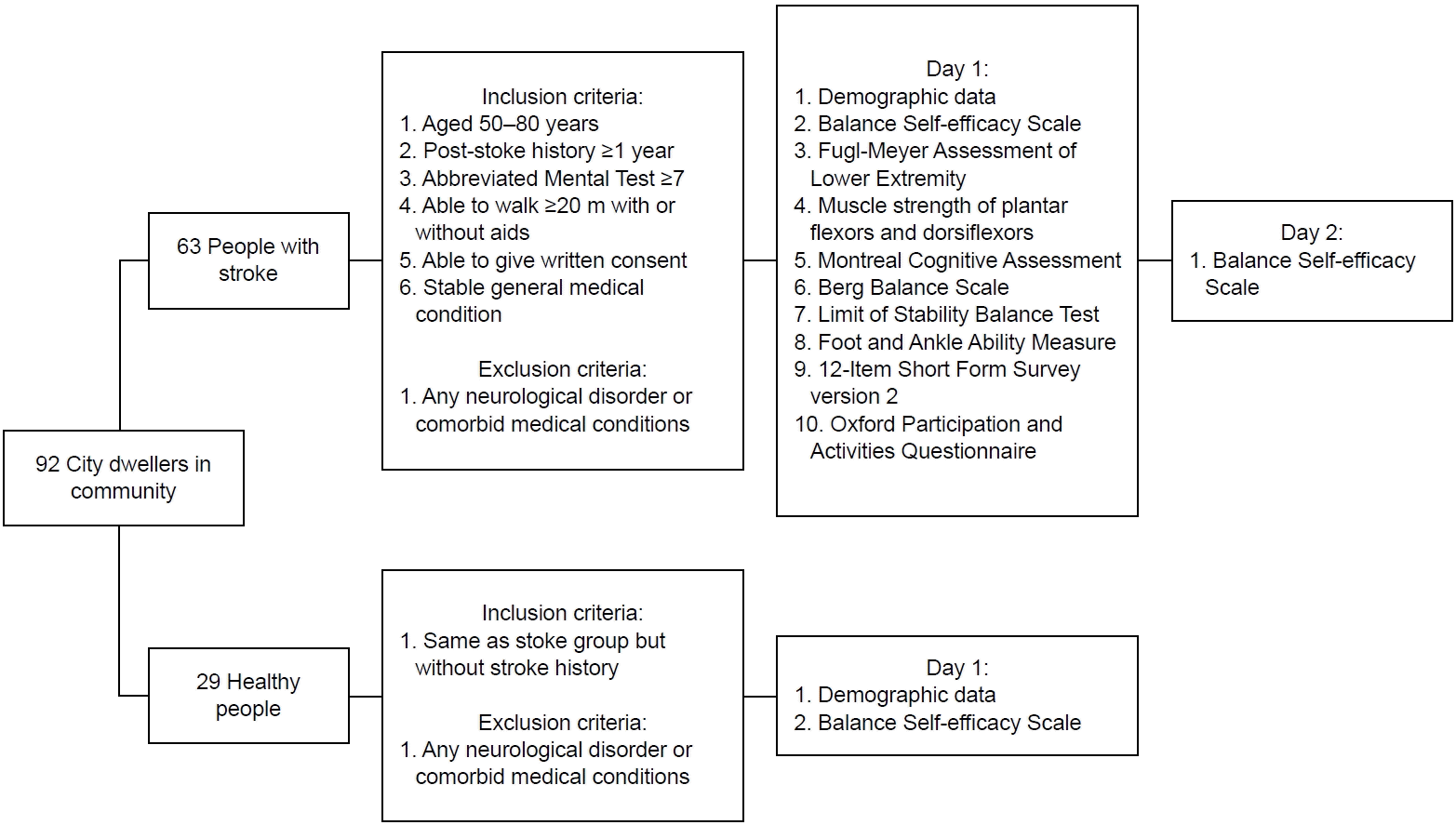
Two trained raters conducted and measured the BSE scale simultaneously using the standardised assessment form. On Day 1, the demographic and the BSE data of both the stroke and control groups were collected. The subjects with stroke completed the BSE scale, Fugl-Meyer Assessment of Lower Extremity (FMA-LE), muscle strength assessment of plantar flexors and dorsiflexors on both the affected and unaffected sides, Montreal Cognitive Assessment (MoCA), Berg Balance Scale (BBS), Limit of Stability (LOS), Foot and Ankle Ability Measure (FAAM), 12-Item Short Form Survey (SF-12) version 2, and Oxford Participation and Activities Questionnaire (Ox-PAQ). On Day 2, after a 7-day interval, subjects with stroke who had participated on Day 1 repeated the BSE assessment to investigate its test-retest reliability. Healthy older adults’ data were used to determine the BSE cut-off scores for identifying subjects with stroke (Fig. 1).
Outcome measures
BSE
The BSE scale is a self-reported assessment tool used to evaluate the perceived ability to perform activities without losing balance or experiencing unsteadiness of older adults and identify their fall risk [10]. It comprises 18 items and one open-ended question that assess people’s confidence in performing daily tasks with or without assistance including getting out of a chair and bed, climbing up a flight of 10 stairs, getting into or out of a shower, removing objects at the shoulder and head level, walking across uneven ground with or without good lighting, and single leg standing. Each item is rated as the proportion of time that participants show confidence when engaging in particular tasks, from 0% to 100%, with a maximum possible score of 1,800 after the maximum percentage is divided by 100% [10]. Higher BSE scores indicate higher balance confidence. It has shown excellent test-retest reliability and good internal consistency in community-dwelling older adults.
FMA-LE
The FMA-LE motor domain subscale is used to measure lower limb motor control in patients during post-stroke recovery [12]. It comprises 17 items that assess reflexive, synergistic, and non-synergistic movements on a 3-point ordinal scale, with a maximum possible score of 34 [12]. It showed excellent test-retest reliability (ICC=0.95) in people with stroke [13].
Muscle strength
Lafayette hand-held dynamometers (Model: 01165A, Lafayette Instrument) were used to quantify the muscle strength of dorsiflexors and plantar flexors on the affected and non-affected sides while the subject was in supine position, according to the principles of “make test” (contracting muscles maximally for 5 seconds). Each muscle underwent 2 trials with sufficient rest intervals in-between to determine average muscle strength. Higher peak force detected from the force plate indicates greater muscle strength. Hand-held dynamometers have excellent test-retest reliability in differentiating between paretic limb muscle (ICC=0.955) and non-paretic muscle (ICC=0.925) in people with stroke [14].
MoCA
The MoCA is a 30-point test assessing cognitive functions, including visuospatial abilities, attention, language, abstract reasoning, memory, executive function, and orientation [15]. Each domain includes different related tasks and points. Higher scores represent higher levels of cognitive abilities. A cut-off score of 26 is considered to indicate mild cognitive impairment [15]. The MoCA showed excellent test-retest reliability (ICC=0.85) in people with chronic stroke [16].
LOS
The LOS measures one’s ability to shift the center of pressure (COP) to stability limits without losing balance [19]. A computerised dynamic posturography system (Bertec Corporation) was used, which consists of a dynamic balance force plate with a distinctive dome for visual stimulation. Subjects were instructed to stand barefoot on the force plate wearing harnesses and move their COP as far as possible by leaning at the ankles in eight directions. The results included performance on different axes and composite scores, namely (1) directional control (DCL), i.e., the extent of movement in the targeted direction; (2) end point excursion (EPE), i.e., the extent of leaning on the first attempt; (3) maximum excursion (MXE), i.e., the maximum extent of leaning during the trial; (4) reaction time (RT) to the instruction; and (5) mean movement velocity (MV) [20]. This system has showed good test-retest reliability (ICC=0.84–0.88) in people with stroke [19].
FAAM
The FAAM is a 29-item self-reported questionnaire evaluating the physical function of individuals with ankle-and foot-related impairments [21]. It comprises ADL and Sport subscales, with maximum score of 84 and 32, respectively. Each item is scored on a 5-point scale from 0 to 4 representing “no difficulty”, “slight difficulty”, “moderate difficulty”, “extreme difficulty”, and “unable to do”, respectively. Higher scores represent better physical function of foot and ankle. The ADL subscale (ICC=0.89) and Sports subscale (ICC=0.87) have shown excellent test-retest reliability in people with lower leg musculoskeletal disorder [21].
SF-12
The SF-12 is a two-part questionnaire assessing quality of life using a norm-based scoring system. The physical component summary (PCS) assesses physical functioning, role-physical, bodily pain, and general health, while the mental component summary (MCS) assesses vitality, social functioning, role-emotional, and mental health [22]. The SF-12 have shown good internal consistency and test-retest reliability in the PCS (Cronbach’s α=0.845, ICC=0.807) and MCS (Cronbach’s α=0.812, ICC=0.902) in people with stroke [23].
Ox-PAQ
The Ox-PAQ is a self-reported questionnaire evaluating improvements in participation and activity across routine activities (14 items), emotional well-being (5 items), and social engagement (4 items) [24]. A satisfactory test-retest reliability (ICC=0.91–0.94) was found in the Chinese version in people with stroke [25].
Statistical analysis
SPSS software (version 29; IBM Corp.) was used for data analysis with a significance level (α) set at 0.05. Descriptive statistics were utilized to analyze demographic data, means, standard deviations (SDs), and outcome measures for all subjects.
The Kolmogorov–Smirnov test and Levene’s test were used to check data normality and variance homogeneity. The paired sample t-test was used to compare the BSE score between high- and low-function groups distinguished based on their BBS and FMA-LE performance.
For test-retest reliability, intraclass correlation model 2 (ICC2,1) was used with raters randomly assigned from the research team, A single measurement was taken for result generalisation. ICC values of <0.5, 0.5–0.75, 0.75–0.90, and >0.90 indicate poor, moderate, good, and excellent reliability respectively [26]. The MDC and standard error of mean (SEM) were calculated by the formulae MDC=1.96×√2×SEM and SEM=SD√(1-ICC). SD is used to denote the BSE results on Day 1 and 2, while ICC value is used for the test-retest reliability coefficient.
The correlations coefficients for the relationship between the BSE score and other outcome measures, namely FMA-LE core, muscle strength of dorsiflexors and plantar flexors on affected and non-affected sides, MoCA, BBS, LOS, FAAM, SF-12, Ox-PAQ scores, were calculated. Pearson’s r and Spearman’s rho were used for parametric and non-parametric data respectively. Correlation values (r/rs) falling in <0.10, 0.10–0.39, 0.40–0.69, and 0.70–0.89 and 0.90–1.00 indicate negligible, weak, moderate, strong and excellent correlations, respectively [27].
ROC curve was used to explore the area under the curve (AUC) for discrimination accuracy. Youden’s index was used to determine cut-off score from the ROC curve by maximizing the value between sensitivity and 1-specificity, distinguishing between two groups. AUCs of ≥0.9, ≥0.8 to <0.9, ≥0.7 to <0.8, ≥0.6 to <0.7, ≥0.5 to <0.6 were considered to indicate excellent, considerable, fair, poor, and fail discrimination accuracy, respectively [28].
RESULTS
Characteristics of the participants
The 63 people with stroke and 29 healthy older adults were recruited, with mean ages in 65.60 years (SD 5.93) and 65.34 years (SD 5.76), respectively (Table 1).
Comparison of BSE between two subject groups
The comparison of BSE scores between two groups is shown in Table 2. The mean BSE score on Day 1 was significantly different between the healthy older adults 1,570.69 (SD 208.25) and people with stroke (1,119.52±353.61; p<0.001). However, no significant difference was observed between the mean BSE scores of people with stroke on Day 1 (1,119.52±353.61) and Day 2 (1,139.84±339.42; p=0.533).
Reliability and the MDC
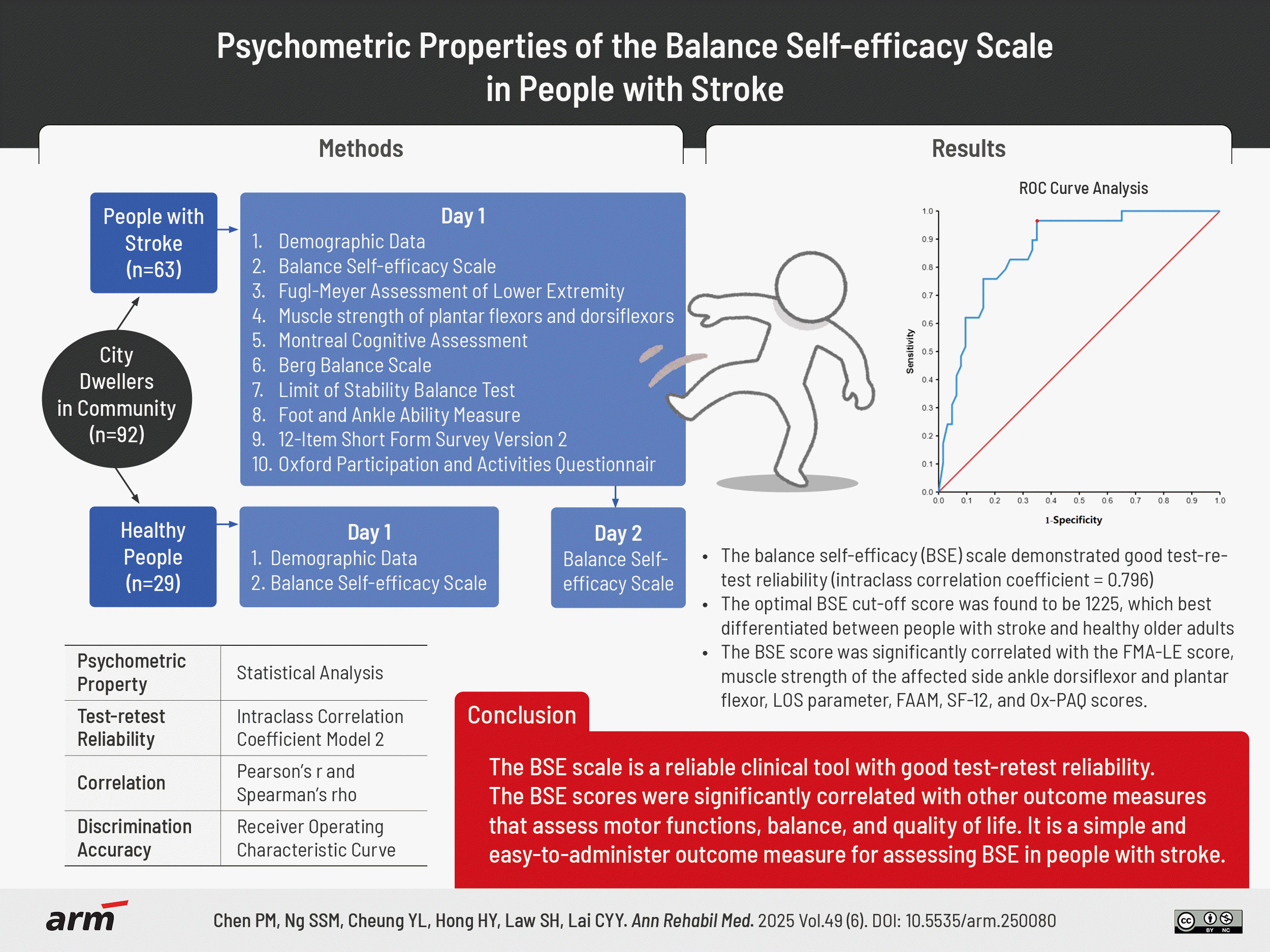
The BSE scale demonstrated good test-retest reliability (ICC=0.796) in people with stroke (Table 3). The SD and MDC of BSE were 345.456 and 433.74, respectively.
Correlation of the BSE with other outcome measures
Correlations between the BSE scale and other outcome measures are shown in Table 4. BSE score was significantly and positively correlated with FMA-LE scores (r=0.490, p<0.001), Muscle strength of ankle dorsiflexors and plantar flexors on affected side (rs=0.301–0.402, p<0.05); BBS (rs=0.511, p<0.05); FAAM ADL scale and sport scale (rs=0.425–0.663, p<0.001); SF-12 (r=0.351–0.376, p<0.01).
The BSE score showed a significant correlation with the LOS-RT (r=-0.28, p=0.042), LOS MV (r=0.334, p=0.014), LOS-EPE (0.425, p=0.002), LOS MXE (r=0.431, p=0.001), and DCL (r=0.379, p=0.006) composite score, respectively.
The cut-off score
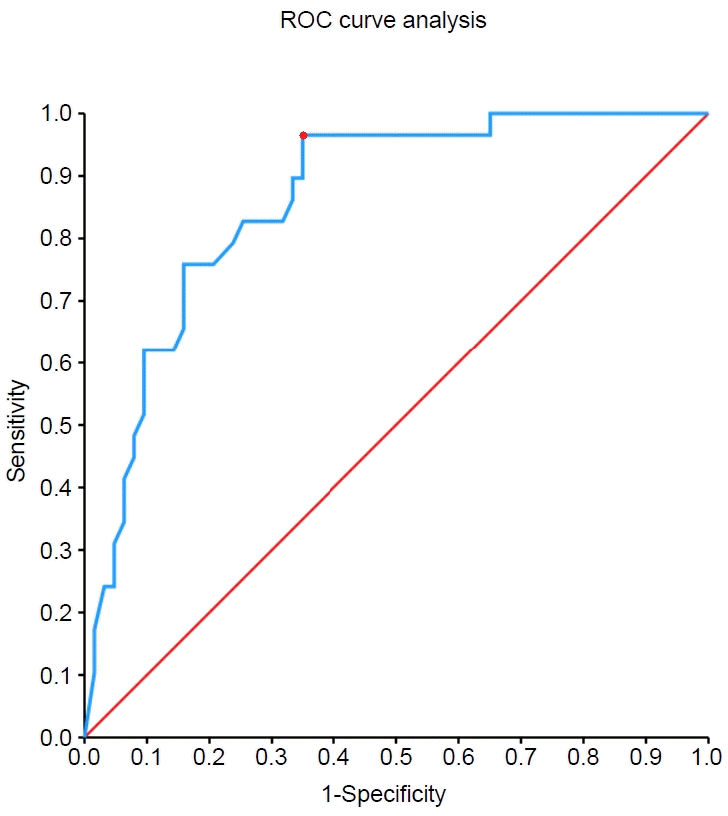
The ROC curve of BSE and Youden’s index analysis are shown in Fig. 2. The optimal cut-off score on BSE scale was 1,225, with AUC of 0.862, sensitivity of 0.966, and specificity of 0.651 (Table 5), which significantly differentiated the performance in the BSE scale between healthy older adults and people with stroke (p<0.001).
DISCUSSION
This is the first study to investigate the psychometric properties of BSE scale in people with stroke. The scale demonstrated good test-retest reliability (ICC=0.796) in people with stroke. It demonstrated significant correlations with several stroke-specific outcome measures, namely FMA-LE, muscle strength of affected ankle dorsiflexors and plantar flexors, BBS, LOS, FAAM ADL and Sports subscales, SF-12, and Ox-PAQ. The MDC of BSE score was 433.74, with a cut-off value of 1,225 differentiating between healthy older adults and people with stroke.
BSE performance
Stroke subjects showed significantly lower BSE performance (mean BSE score Day 1: 1,119.52) compared to healthy subjects (mean BSE score Day 1=1,570.69, p<0.001).
This indicates BSE was lower in people with stroke than in healthy adults. Similar results were found in a study that examined BSE using ABC scale and its relevance to physical function and perceived health status through comparisons between post-stroke people and the general older population [29]. A higher BSE has been associated with higher level of activity and participation in people with stroke, which is reflected by items in ABC scale [30]. Meanwhile, the modified FES score was inversely correlated with the ABC, indicating that people with higher BSE had less fear of falling [30].
Post-stroke physical limitation reduces one’s balance function and creates stressful situations when performing various ADLs. This negatively influences personal judgement, leading to a perception of reduced self-abilities and, consequently, low BSE. Low BSE is thought to be associated with catastrophic thinking, which magnifies the perception of fall consequences; this manifests as fear-avoidance behavior, leading to a reduction in physical activities [7]. Such behavior may hasten physical deterioration, exacerbate existing balance impairment, which perpetuate a vicious cycle.
The BSE scale reliability
The BSE scale demonstrated good test-retest reliability (ICC2,1=0.796, 95% confidence interval=0.683–0.872) in people with stroke, aligning with prior results on BSE performance in community-dwelling older adults [10]. This high test-retest reliability may stem from the standardized BSE protocol and well-trained raters minimizing measurement errors during data collection. Moreover, the 7-day interval between trials was sufficient to minimize subjects’ learning effect and guarantee high reliability [31].
Correlation of the BSE with other outcome measures
FMA-LE and muscle strength
FMA-LE and muscle strength of affected ankle dorsiflexors and plantar flexors showed moderate positive correlation with BSE score. Some BSE items, like single leg standing and stair climbing, pertaining to coordination, hip-knee-ankle joint control is dominated by ankle dorsiflexors and plantar flexors muscle strength. For instance, ankle dorsiflexors aid in foot clearance during the swing phase, while plantar flexors assist in push-off during the stance phase [32]. Co-contraction of ankle dorsiflexors and plantar flexors also contribute to ankle stability during stair climbing [33]. Ankle stability is essential for maintaining balance in static, dynamic, and reactive conditions, necessitating adequate muscle strength, flexibility, and proprioception in the ankle and foot [34]. Previous studies have shown that sensory and motor impairments in the foot and ankle of stroke patients impact balance during tasks like stair climbing and general activities [34]. Therefore, improved performance on FMA-LE may lead to higher functional abilities and increased perception of balance self-efficacy.
BBS
A significant, positive moderate correlation was found between the BBS and BSE scale. Both scales are used to assess functional balance in daily life. Certain items of the BBS are similar to those of the BSE scale such as e.g., sit-to-stand in the BBS is similar to items 1 and 2 of the BSE scale, forward reaching with an outstretched arm in the former is similar to item 10 of the latter, and single-leg standing in the former is similar to items 16 and 17 of the latter. Therefore, a correlation was observed between scales due to similar assessment items. A study also showed that lower baseline balance performance was significantly associated with lower initial balance confidence in people with stroke [35]. As such, higher BBS scores are associated with higher BSE scores which is consistent with our findings.
LOS
The BSE scale has significant correlation with various LOS parameters. The LOS assesses the performance of laboratory balance in maintaining COP within base of support (BOS). The BSE scale items involving single leg standing and walking are related to balance control in a various BOS [36]. This can explain significant positive correlation between various parameters of LOS and BSE scores. Moreover, people with slower RT to regain COP within the BOS during walking showed a higher fall risk with poorer postural balance, which explains the negative correlation between the LOS-RT and BSE scale in our study [37]. Therefore, better performance in the LOS is associated with higher scores on the BSE scale.
FAAM
The ADL subscales and Sport subscales of FAAM have shown significant and moderate correlation with the BSE scale. The FAAM comprises two subscales to evaluate the physical function of individuals with ankle and foot conditions and their self-perception of balance ability. All items in the BSE scale are related to ankle proprioception and muscle strength required to maintain balance, such as single leg standing and walking [34]. Sufficient ankle stability requires adequate muscle strength, flexibility, and proprioception in the ankle and foot to maintain static, dynamic, and reactive balance [34]. Therefore, the FAAM is positively associated with the BSE scale which is consistent with our finding.
SF-12
The PCS and MCS of the SF-12 were significantly correlated with the BSE scale. The SF-12 is a subjective scale that evaluates people’ self-perception of balance ability in daily life from physical and mental aspects. The PCS assesses physical activities, work accessibility, and stair climbing ability, while the MCS evaluates their mental health condition. A study discovered that the PCS was strongly correlated (r=-0.248, p<0.05) with fear of fall [38]. Additionally, poor BSE is negatively influenced by negative emotions leading to impaired balance and social limitations [39]. BSE is related to individuals’ self-perception of their balance control in various ADLs, encompassing physical and mental aspects. Therefore, the physical and mental aspects of the SF-12 and the BSE are significantly correlated.
Ox-PAQ
The routine activities and emotional well-being domains of Ox-PAQ showed a significant, negative moderate correlation with BSE performance. Higher Ox-PAQ scores reflect more difficulty in activity and participation. Our results revealed that people with lower scores in the domain of routine activities, such as ambulation and balance, had relatively better performance on the BSE scale. In the domain of emotional well-being, BSE is indicated to be correlated negatively with anxiety, depression, and stress, which reduce gait speed and thereby contribute to an increased fall risk in older adults [40]. Therefore, these results imply that negative emotions reduce the BSE.
MoCA
No significant correlation was observed between the MoCA and BSE scores. MoCA is used to assess individuals’ cognitive function [15]. Cognition is associated with balance, with executive function being the most important component that influences balance control. The nonsignificant correlation revealed in this study suggests that the actual balance ability contributing more than general cognitive function in the BSE of people with stroke.
The cut-off scores of BSE
The BSE cut-off scores could well differentiate subjects between healthy older adults and older adults with stroke, with a high AUC of 0.862 (Fig. 2). The results showed that the optimal BSE cut-off score has an 86.2% possibility of discriminating the fall risk between healthy older people and people with stroke. The optimal BSE cut-off scores was 1,225 out of 1,800. The BSE scale showed high sensitivity and fair specificity for identifying people with stroke. Therefore, the BSE is a valid assessment tool for screening the fear of fall between people with stroke and healthy older adults.
Limitations and future directions
This study has a few limitations. First, the subjects were people aged 50 to 80 years who were active members of self-help groups and had high levels of functional ability. This may not represent the broader stroke population, particularly those with more severe impairments or lower community engagement. Second, as the study population comprised significantly more males than females. This may have introduced bias, as males generally possess greater muscle mass and strength, which could contribute to better balance performance. Lastly, stroke severity was not stratified or controlled for in the analysis. Including this factor in future studies could enhance the understanding of how balance ability may vary across different levels of stroke impairment.
In the future, the BSE scale could be extended to younger age groups or stroke survivors with different recovery levels. Future studies are also warranted to investigate the interaction between balance confidence and balance performance.
Clinical implication
A comprehensive, validated, and reliable assessment tool is essential to assess BSE for people with stroke in ADLs. The findings of this study can help clinician to identify the level of assistance required and level of independence in performing ADLs. This could assist the clinicians in designing the appropriate intervention to improve their functional capability.

 XML Download