



 PDF
 Citation
 Print


INTRODUCTION
Pancreaticoduodenectomy (PD) remains the primary surgical intervention for tumors located in the pancreatic head and the periampullary region. Despite advances in surgical procedures, PD continues to be associated with considerable morbidity, including complications such as delayed gastric emptying (DGE), postoperative pancreatic fistula (POPF), and others. Of these, DGE is particularly noteworthy, as it may prolong hospitalization, increase healthcare expenditures, and lead to patient discomfort, even though it is typically self-limiting. Reported DGE incidence after PD ranges widely, from 14% to 45% [1]. The development of DGE is multifactorial, influenced by neurohormonal mechanisms, gastroparesis, and anatomical reconstruction. Various interventions have been proposed to minimize DGE, one of which is the Braun enteroenterostomy, a procedure that connects the afferent and efferent jejunal limbs. The purpose of Braun enteroenterostomy is to divert bile from the stomach, limit reflux, provide stability to the gastrojejunostomy (GJ), preserve distal biliopancreatic flow, and lower afferent pancreaticojejunostomy (PJ) loop pressure, thereby potentially reducing POPF. Nonetheless, the impact of Braun enteroenterostomy on DGE remains controversial. While certain studies suggest a reduction in DGE incidence with this approach, others have found no significant advantage. This study was designed to prospectively evaluate the impact of Braun enteroenterostomy on the rate of DGE following PD, by comparison with a retrospective control group who underwent standard PD at the same institution over the preceding four years. Additionally, other postoperative outcomes, such as the occurrence of pancreatic fistula, biliary leakage, and duration of hospital stay, were also analyzed [1,2].
MATERIALS AND METHODS
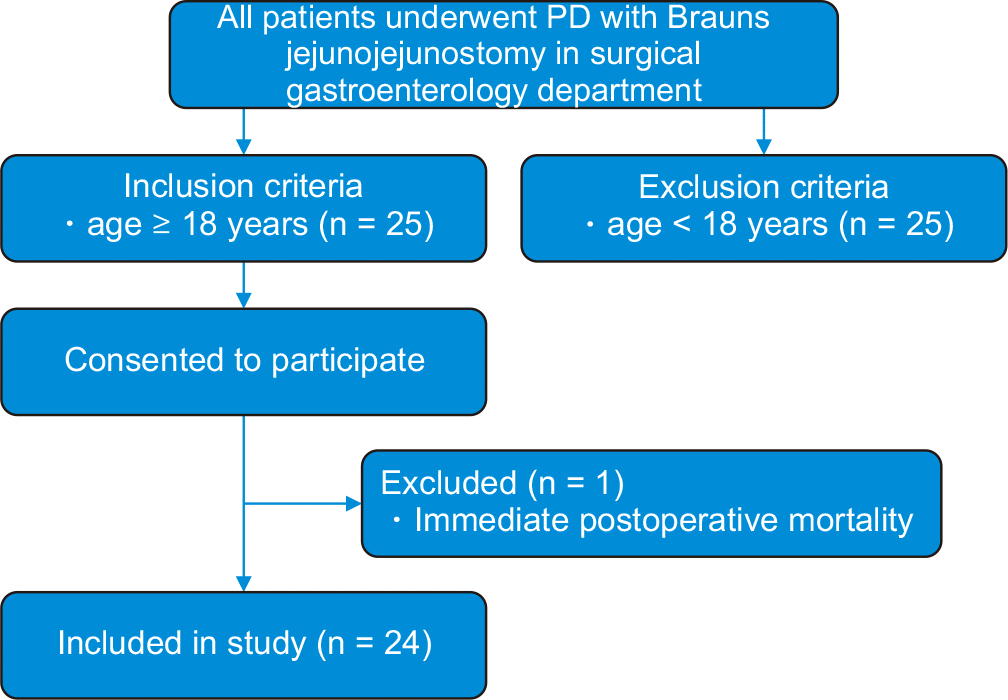
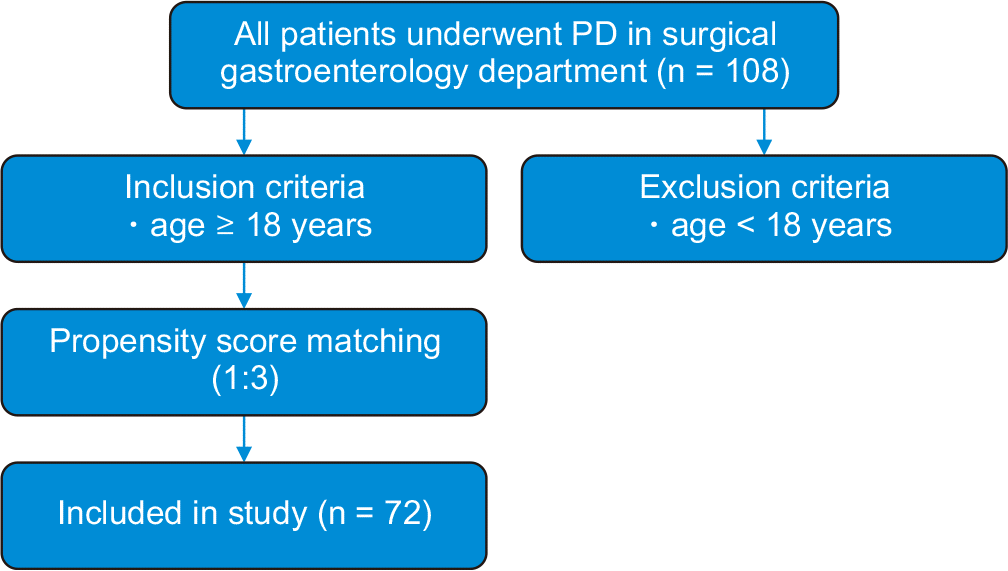
This prospective, single-center study was carried out at a tertiary care teaching hospital in eastern India. Consecutive patients who underwent PD with Brauns enteroenterostomy between May 2023 and August 2024 were enrolled in the research. The study population consisted of adults over 18 years undergoing PD with Brauns enteroenterostomy. Incorporation of Brauns enteroenterostomy as part of reconstruction was based on findings from previous research and aimed at reducing the incidence of DGE at our institution. Ethical clearance was granted by the Institute’s Ethical Committee review board. Informed consent was obtained from all participants prior to enrollment. The trial was registered with the Clinical Trial Registry India (CTRI), Trial No: CTRI/2024/05/067048. A retrospective control group was formed by extracting data from 72 patients who previously underwent standard PD without Braun enteroenterostomy during the four years preceding the study (after propensity score matching at a 1 : 3 ratio was used to match age, sex, preoperative biliary drainage, intraoperative blood loss, and pancreas texture). The CONSORT diagrams for both cohorts are depicted in Fig. 1 and 2.
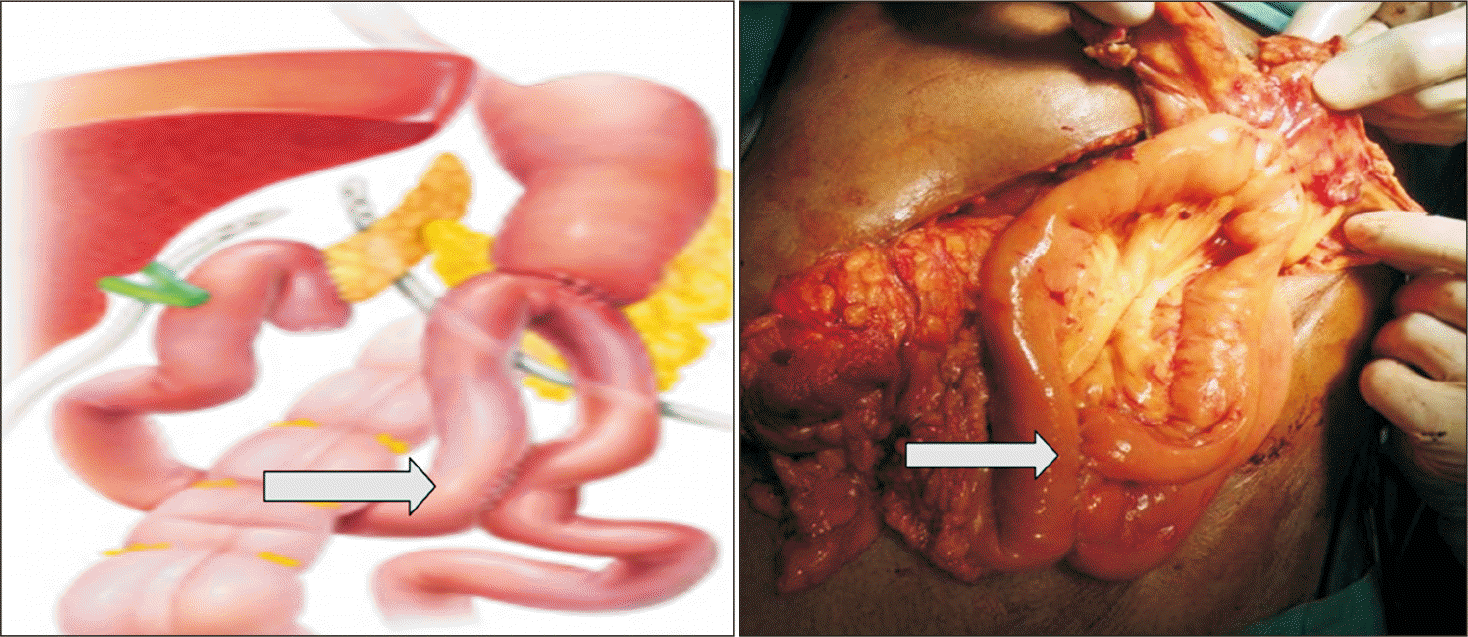
All patients underwent standard open PD. Reconstruction involved a PJ (modified Blumgart technique), followed by hepaticojejunostomy placed approximately, and GJ using an antecolic approach, then Braun jejunojejunostomy connecting the afferent and efferent jejunal limbs distal to the GJ (Fig. 3). All procedures were performed by three principal surgeons, and residents with experience in more than 30 open PD cases served as assistants. Data collection included patient demographics, preoperative comorbidities, operative characteristics, postoperative complications, duration of hospitalization, and histopathological details. The main outcome measured was the rate of DGE, defined and graded according to criteria established by the International Study Group of Pancreatic Surgery (ISGPS). Secondary outcomes comprised rates of POPF (ISGPS criteria), other postoperative complications, and length of hospital stay. Statistical analyses were conducted using SPSS version 28.0. Continuous data are presented as means with standard deviations (SDs) and were analyzed using t tests or Mann–Whitney U tests when appropriate. Categorical variables are shown as proportions and were compared using chi-square or Fisher’s exact tests. Logistic regression analysis was conducted to determine significant factors associated with DGE. A p-value of <0.05 was considered statistically significant.
This study was approved by the Institutional ethics committee, Institute of Medical Science and SUM Hospital IEC Registration No: ECR/627/Inst/OR/2014/RR-20. Our study adhered to the Declaration of Helsinki.
RESULTS
Patient characteristics
The study enrolled 25 consecutive patients who underwent PD with Braun enteroenterostomy. One patient experienced postoperative mortality within 24 hours and was excluded from the final analysis, resulting in a study population of 24 patients. The patients had a mean age of 54.7 ± 12.26 years and a median age of 58 years, with females comprising 58.3% of the group. The average body mass index (BMI) was 21.8 ± 2.87 kg/m2. The most frequently reported initial symptoms were jaundice (79.2%, n = 19) and pain (54.2%, n = 13). Comorbidities included diabetes (25%, n = 6), hypertension (20.8%, n = 5), and chronic obstructive pulmonary disease (4.2%, n = 1). Additionally, 75.0% (n = 18) had undergone preoperative stenting. The mean hemoglobin was 11.058 ± 2.04 g/dL, and mean total bilirubin was 1.427 ± 1.16 mg/dL. The average duration of hospitalization following surgery was 12.5 ± 3.78 days. The mean operative time was 426.67 ± 49.05 minutes, and the average intraoperative blood loss was 485.43 ± 250.10 mL; the majority (79.1%, n = 19) received one unit of intraoperative transfusion. Intraoperatively, the pancreatic texture was described as soft in 12 patients (50.0%), intermediate in eight patients (33.3%), and hard in four patients (16.7%), while the pancreatic duct diameter averaged 3.96 mm. Within this cohort, 25.0% (n = 6) developed Grade A DGE, and 8.3% (n = 2) developed Grade B DGE. No cases of Grade C DGE were recorded. Regarding postoperative complications, 29.1% (n = 7) of patients developed biochemical pancreatic fistulas, 8.3% (n = 2) developed Grade B POPF, and 62.5% had no POPF. Surgical site infections (SSIs) occurred in four patients (16.7%); 8.3% (n = 2) developed Grade B post-pancreatectomy hemorrhage (PPH), but no cases of bile leakage were reported. The mean length of postoperative hospitalization was 12.5 days. Additional complications included ileus, intestinal anastomosis leakage, and myocardial infarction (MI), each observed in one patient. Final histopathology most frequently revealed ampullary tumors (18 patients), followed by tumors of the pancreatic head (3 patients).
Comparative analysis
Baseline characteristics were similar between the two groups, although the mean BMI was significantly lower in the Braun group compared to the non-Braun group (21.8 vs. 23.6, p = 0.022). Preoperative biliary stenting was performed more frequently in the Braun group (75% vs. 38.9%, p = 0.002). Patients in the Braun group had a higher incidence of anorexia (58.3%) than those in the non-Braun group (23.6%) (p = 0.002), and weight loss was also significantly more prevalent in the Braun group (37.5% vs. 6.9%, p < 0.001). The mean pancreatic duct diameter was significantly smaller in the Braun group (3.96 mm) than in the non-Braun group (5.35 mm) (p = 0.011). See Table 1 for further details.
The intraoperative data demonstrated that the mean operative time was 426 minutes in the Brauns group compared to 409 minutes in the non-Brauns group, a difference that did not reach statistical significance (p = 0.102). Likewise, estimated blood loss was similar between the two groups, with the Brauns group averaging 485 mL and the non-Brauns group averaging 435 mL (p = 0.304), suggesting that the inclusion of Braun’s enteroenterostomy did not meaningfully influence surgical duration or blood loss. There was also no significant difference between groups in intraop blood transfusion rates. The pancreatic duct diameter, an important surgical parameter, differed significantly; the Brauns group had a smaller mean duct diameter of 3.96 mm (SD: 1.68) and a median of 3.5 mm, compared with the non-Brauns group’s mean of 5.35 mm (SD: 2.44) and median of 5.5 mm.
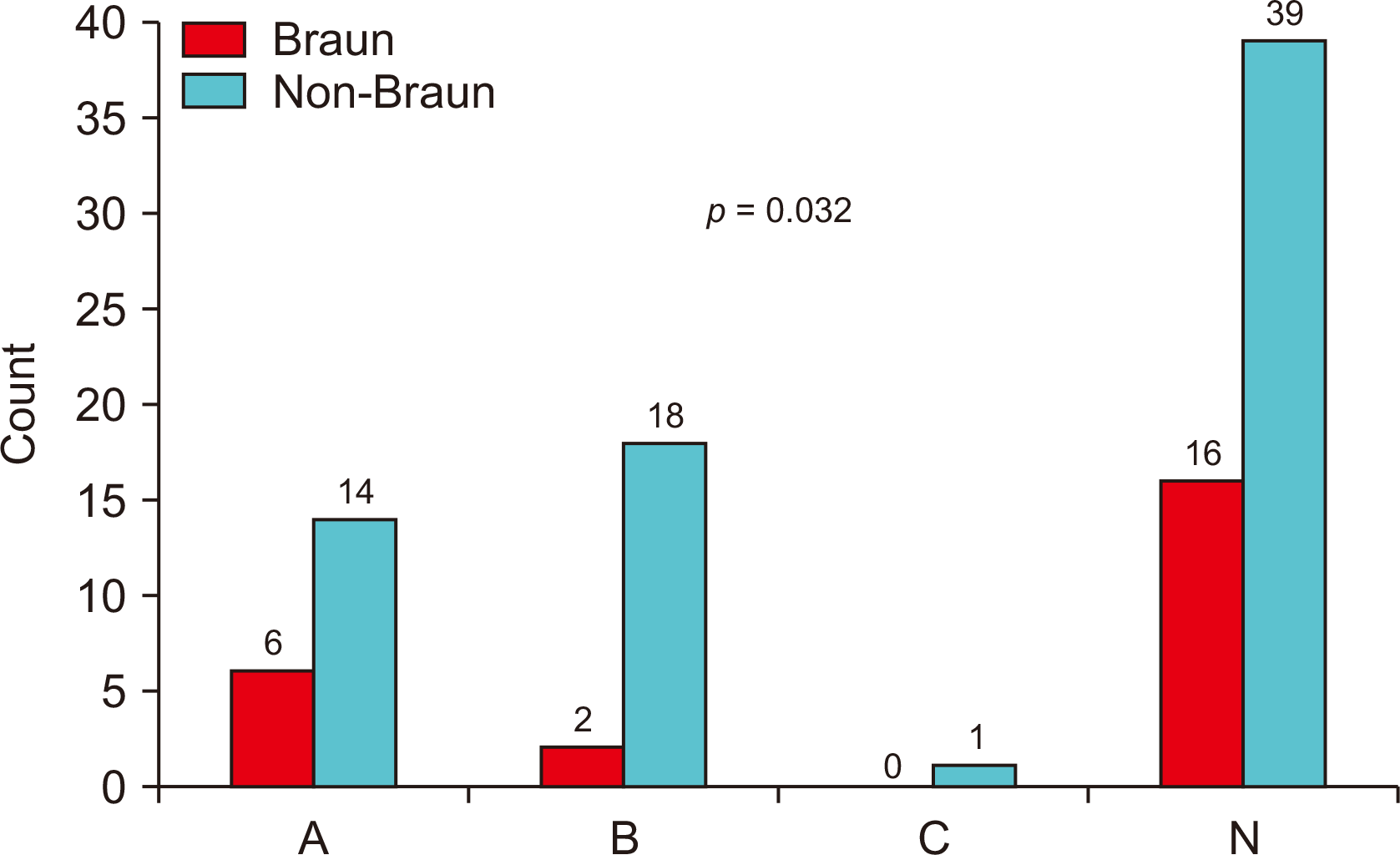
There was a significant difference in DGE grade distribution between the Brauns and non-Brauns groups, as reflected by a p-value of 0.032. Notably, a higher proportion of severe DGE, particularly Grade B, was recorded in the non-Brauns cohort, with 25.0% of patients affected, indicating a greater risk of moderate DGE in this group. Conversely, 66.7% of Brauns patients had no DGE, compared to 54.2% in the non-Brauns group, underscoring an increased likelihood of avoiding DGE among Brauns patients. These findings indicate that the Brauns group generally experienced either no DGE or only mild (Grade A) forms, whereas the non-Brauns group had a predisposition for moderate to severe DGE (Grades B and C) (Table 2, Fig. 4).
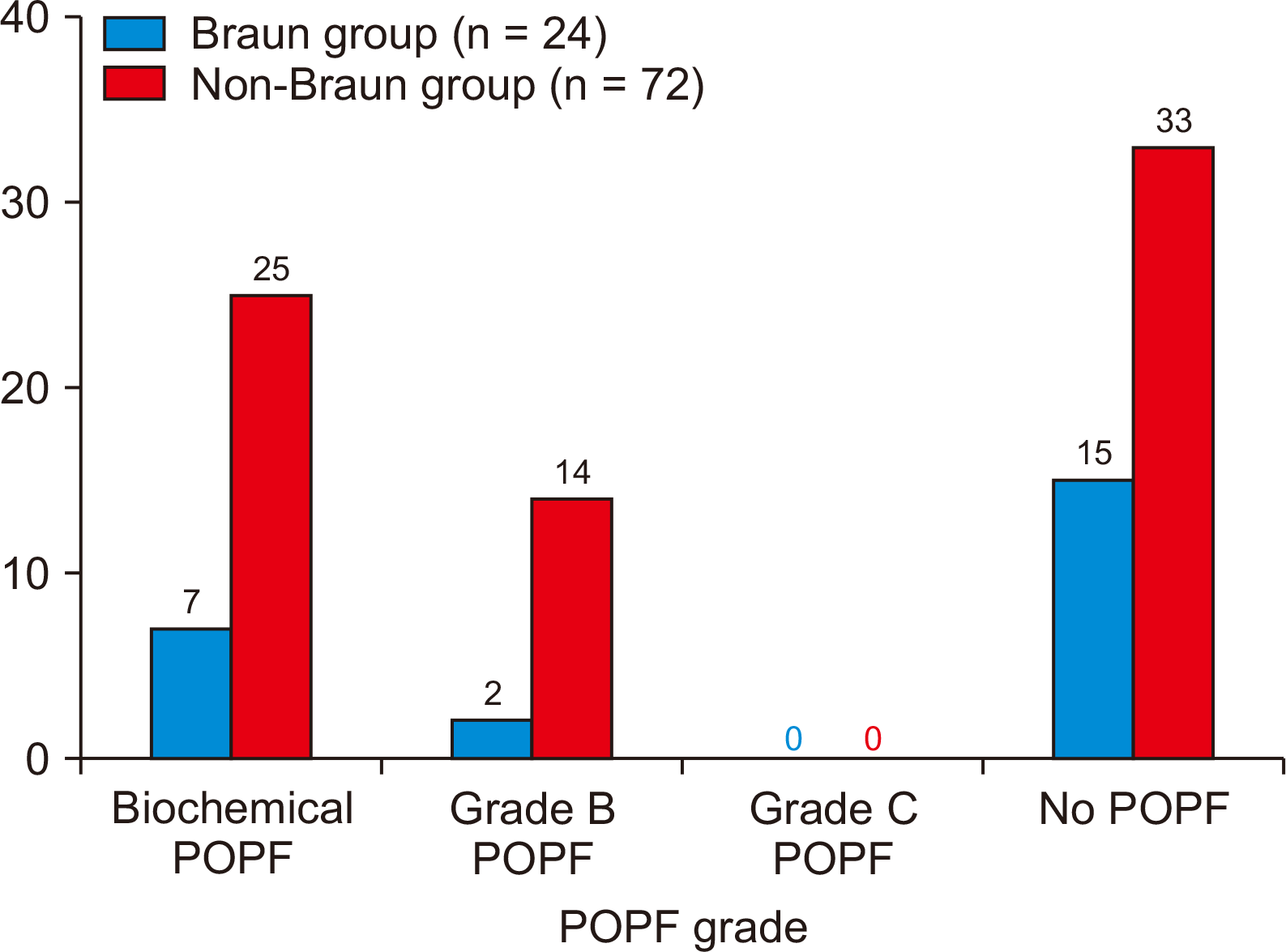
Additional postoperative outcomes were thoroughly examined, with particular attention to the occurrence of POPF. Biochemical POPF was present in 7 (29.1%) of the Brauns group and 25 (34.7%) of the non-Brauns group, equating to 33.3% of all patients and showing comparable rates between groups. The incidence of Grade B POPF was 2 (8.3%) among Brauns patients and 14 (19.4%) among non-Brauns patients. This difference is clinically important, indicating that the risk of Grade B POPF was more than two-fold higher in the non-Brauns group. Importantly, Grade C POPF did not occur in either group. It was also observed that most Brauns patients (62.5%) did not develop POPF, whereas only 45.8% of non-Brauns patients remained unaffected. There was a statistically significant difference in the overall POPF grade distribution between the groups (p = 0.045), supporting the impact of surgical technique on POPF severity (Table 3, Fig. 5).
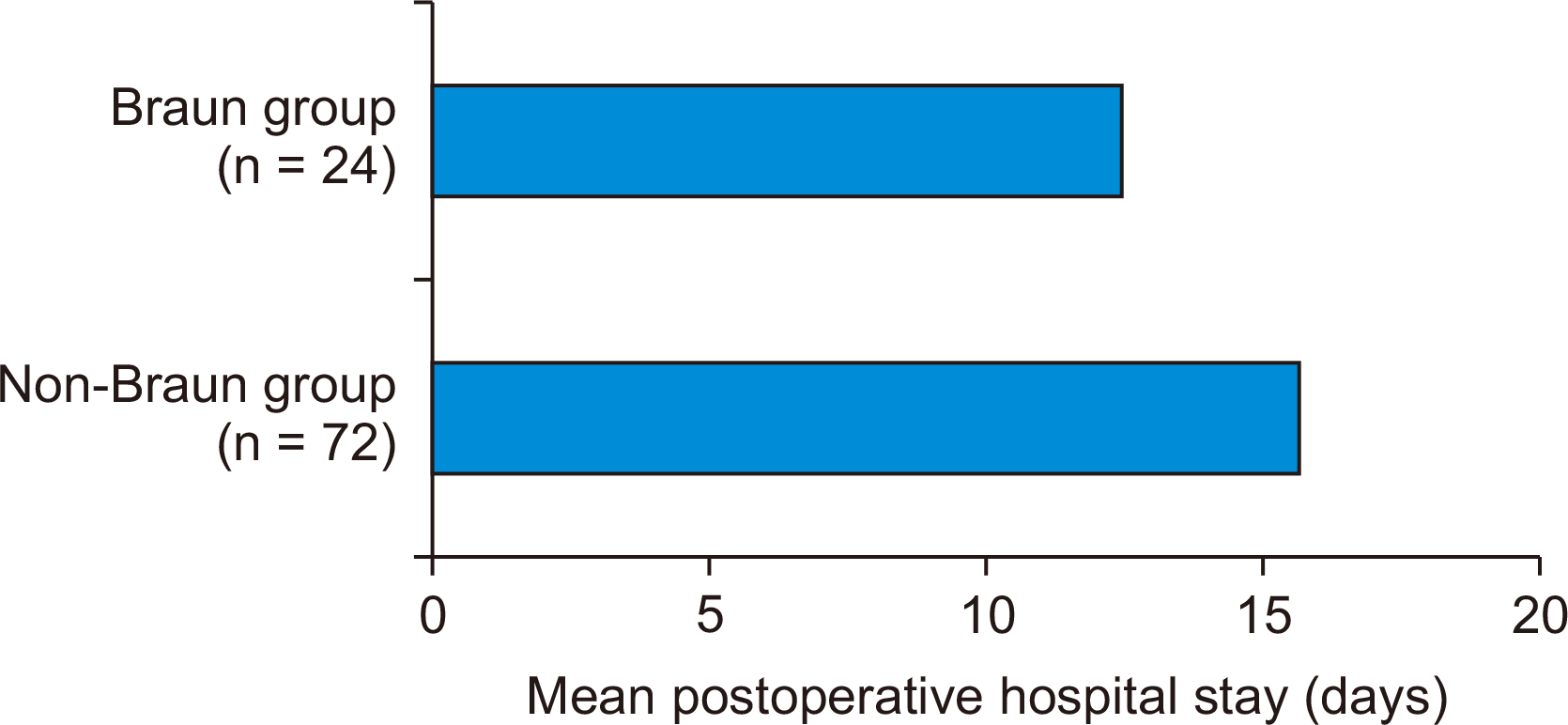
The analysis revealed that no biliary leaks were observed in the Brauns group, whereas six patients (8.3%) in the non-Brauns group experienced biliary leaks. These results indicate that the Brauns procedure may lower the incidence of bile leakage; however, the difference did not reach statistical significance (p = 0.144). SSIs occurred in four Brauns patients (16.7%) and 17 non-Brauns patients (23.6%), with no statistically significant difference between the groups (p = 0.701). In the Brauns group, there were no cases of Grade A PPH, two cases (8.3%) of Grade B, and no cases of Grade C; the non-Braun group showed a similar distribution, with one case (1.4%) of Grade A, three cases (4.2%) of Grade B, and two cases (2.8%) of Grade C. Other complications such as ascites, secondary suturing, urinary tract infection, ileus, intestinal anastomosis leak, and MI did not differ significantly between the groups. The mean postoperative hospital stay was significantly shorter for the Braun group (12.5 days) compared to the non-Braun group (15.7 days) (p = 0.027) (Fig. 6).
Univariate analysis
Univariate analysis demonstrated that most blood parameters did not have a significant association with DGE. The exception was the tumor marker CA19-9, which was significantly associated (p = 0.045). These findings indicate that moderately elevated CA19-9 levels may be linked to increased risk of DGE but require further investigation. Preoperative biliary drainage showed a significant relationship with DGE (p = 0.003). The use of stents was associated with reduced odds of developing DGE. There were no significant associations identified between intraoperative predictors—including pancreatic duct diameter, intraoperative blood loss or transfusion, or the duration of surgery—and DGE. Among other potential predictors, only type B POPF was significantly related to a higher risk of DGE, with an odds ratio (OR) of 0.053 (p < 0.001). No other variables were meaningfully associated with DGE. Details are shown in Table 4.
DISCUSSION
PD remains the standard treatment for periampullary tumors, distal bile duct tumors, and carcinoma of the pancreatic head. Although the mortality rate for this procedure has dropped to less than 2% in select high-volume centers, the morbidity rate continues to be relatively high [3]. Among the complications that most affect morbidity are POPF and DGE [2].
Various modifications have been implemented to reduce DGE, with one notable approach being the addition of Braun jejunojejunostomy. The findings from this study indicate that incorporating Braun jejunojejunostomy during PD is linked to a decreased incidence of DGE, specifically Grades B and C, a reduced rate of Grade B POPF (though this did not reach statistical significance), and a shortened hospital stay. These observations lend support to the hypothesized advantages of Braun enteroenterostomy, such as providing stabilization of the GJ, improving the distal transit of intestinal contents, and redirecting biliopancreatic secretions away from the stomach. Nonetheless, research by Fujieda et al. [4] has shown that Braun anastomosis does not have a significant effect on intragastric bile reflux following PD.
The reported incidence of DGE displays substantial variation across different studies and surgical methods. Shukla et al. [5] identified a median incidence rate of 10%, with an observed range from 0% to 31%. In recent years, multiple centers in India have explored additional interventions and associations concerning DGE. Keerthi et al. [6] documented DGE rates for both Grade A and B at 31.8% and for Grade C at 2.2%. Arjunan et al. [7] recorded Grade A at 16%, Grade B at 3.3%, with no reported cases of Grade C. Pandey et al. [8] observed Grade A at 12.5%, Grade B at 10.9%, and Grade C at 4.6%. Arora et al. [9] found a 29% incidence of Grade A DGE in patients with antecolic GJs compared to 8% in retrocolic GJs, suggesting that the reconstruction route may play a critical role in DGE rates and providing evidence that an antecolic route can decrease DGE incidence. Both groups in our cohort underwent antecolic GJ. Kanchodu et al. [10] in 2024 noted lower DGE rates in laparoscopic cases, with Grade A at 11.9%, Grade B at 0.1%, and no cases of Grade C. Narayan Singh et al. [11] in 2024 described laparoscopic-assisted surgical outcomes with rates for Grade A at 40%, Grade B at 18%, and Grade C at 2%. These collective data highlight the pronounced variability in DGE incidence across the Indian surgical landscape. In our analysis, the total DGE incidence in the Braun group was 33.3%, compared to 46.8% in the non-Braun group. Further classification showed Grade A DGE at 25% in the Braun group and 20% in the non-Braun group; Grade B DGE at 8.3% in the Braun group and 25% in the non-Braun group. There were no cases of Grade C DGE identified in either study group.
Research on the impact of Braun enteroenterostomy on DGE has yielded variable findings. In a prospective study, Nikfarjam et al. [12] observed an overall DGE incidence of 18.2%. Specifically, the incidence in the Braun group was 4.2%, compared to 35% in the non-Braun group, representing a statistically significant difference and a notably higher proportion of Grade C DGE in the non-Braun group. In a randomized study, Hwang et al. [13] reported an overall DGE incidence of 36.67%, with 26.7% in the Braun group (23.3% Grade A, 3.3% Grade B) and 46.7% in the non-Braun group (23.3% Grade A, 13.3% Grade B, and 10% Grade C).
Although the majority of studies have demonstrated a consistently lower incidence of DGE in the Braun group, a few investigations, including a randomized controlled trial (RCT) by Hwang et al., found no statistically significant difference, even though the non-Braun group was identified as having a higher risk for clinically significant DGE [13-18]. Fujieda et al. [4] similarly reported no statistical difference in DGE rates but observed a numerical reduction within the Braun group. In a retrospective analysis of 395 patients, Zhang et al. [19] also found no difference in DGE rates between groups. The results of the present study are consistent with those reported by Nikfarjam et al. [12] and Hochwald et al. [14], both of whom documented decreased DGE incidence and a reduction in hospital stay associated with the Braun procedure. Furthermore, a meta-analysis by Varghese et al. [20] demonstrated that pylorus-resecting and antecolic reconstruction incorporating Braun jejunojejunostomy are linked to a decreased incidence of DGE. Notably, this meta-analysis addressed a variety of surgical techniques, which makes direct comparison with any single approach more difficult (Table 5).
Cordesmeyer et al. [15] found that only Grade A DGE (4.5%) occurred in the Braun group, whereas the non-Braun group exhibited increased rates across all grades, and Watanabe et al. [18] reported significant group-wise differences in all DGE grades. In contrast, Hwang et al.’s [13] study found no significant difference overall rate or grade-specific incidence of DGE.
In our study, the incidence of clinically relevant POPF (Grade B) was lower in the Braun group (8.3%) compared to the non-Braun group (19.4%, p = 0.045). Furthermore, the Braun group exhibited no cases of Grade C POPF; however, the low case numbers do not permit definitive conclusions. This observation nonetheless suggests a potential protective effect of this reconstructive technique against POPF and warrants further investigation. Our findings are consistent with those of Cordesmeyer et al. [15], who reported lower POPF rates in the Braun group (3.9%) than in the non-Braun group (9.1%, p = 0.696), although this difference did not reach statistical significance. Xu et al. [16] identified a statistically significant reduction in POPF rates from 19.4% in the non-Braun group to 5.3% in the Braun group (p < 0.05), supporting the advantage of bile diversion in preserving anastomotic integrity. Nikfarjam et al. [12] observed no statistically significant differences in POPF between the Braun (21.1%) and non-Braun (29.4%, p = 0.706) groups. Variations in these outcomes may reflect differences in surgical techniques or patient cohorts. Further details are available in Table 6.
Factors influencing DGE
The precise mechanisms underlying DGE remain uncertain. Numerous intraoperative technical modifications, such as the reconstruction type, the reconstruction route, and the anastomosis type, have been identified as influencing DGE. Postoperative complications are also thought to contribute significantly to DGE etiology. Several studies have produced variable results in characterizing potential risk factors for DGE after PD.
In this study, an increased association was observed with only a limited number of factors. The univariate analysis of DGE in relation to various factors shows a higher incidence of DGE in the non-Braun group. A strong association between DGE and POPF B was also documented.
A single-center study by Robinson et al. [21] assessing perioperative risk factors for DGE after PD found that DGE was more frequently associated with BMI >35 (OR, 3.19), operative time >5.5 hours (OR, 2.72), and POPF (59% vs. 27%). Patients who developed DGE experienced prolonged median hospital stays (12 days vs. 7 days) and higher 90-day readmission rates (32% vs. 18%).
A prospective study conducted by Parmar et al. [22] reported that POPF (31.2% vs. 10.1%), sepsis (21.7% vs. 7.0%), SSI (23.9% vs. 7.9%), and reintervention (30.6% vs. 13.7%) were significantly more prevalent in patients who developed DGE (p < 0.0001). In a multivariable analysis, only POPF, sepsis, and reintervention remained independently associated with DGE.
POPF, especially Grade B POPF, is an important risk factor for DGE, as demonstrated by the current study, as well as the findings of Robinson et al. [21] and Parmar et al. [22] Surgical variables, including the reconstruction method (such as retrocolic reconstruction referenced by El Nakeeb et al. [23]) and increased operative duration (as described by of Robinson et al. [21] and Hwang et al. [13]), are also implicated. Patient-related risk factors include elevated BMI (defined as greater than 35 in Robinson et al.’s study [21] and greater than 25 in El Nakeeb et al.’s [23]), diabetes mellitus (El Nakeeb et al. [23]), and malnutrition (identified in both the present study and by Fujieda et al. [4]), all of which contribute to DGE risk. Furthermore, additional variables such as underlying systemic illness, postoperative day 4 albumin level (Qu et al. [24]), a pancreatic duct diameter less than 5 mm (Fujieda et al. [4]), and preoperative biliary drainage and PG (El Nakeeb et al. [23]), may also impact the likelihood of DGE. Notably, the current study demonstrated a stronger association of DGE with the non-Braun group. In our analysis, preoperative weight loss was found to be a significant factor in univariate analysis, highlighting the importance of optimizing nutritional status prior to surgery. Collectively, these findings emphasize that preoperative patient optimization, reduction of surgical adverse events, and adoption of specific surgical approaches could contribute to lowering the incidence of DGE.
Limitations of our study
The modest sample size (n = 25) could restrict the statistical power and may reduce the applicability of our findings to broader clinical populations. Although we utilized propensity score and exact matching to reduce confounding and maintain comparability between Braun and non-Braun groups, residual confounding may still exist. Furthermore, as this is a single-center investigation, its generalizability is limited, particularly for institutions with different surgical expertise, patient profiles, or perioperative protocols. The assessment of DGE relied on ISGPS criteria, which may not capture subtle clinical differences or variations in patient-reported outcomes that could influence interpretation of postoperative recovery. Additionally, the focus on short-term post-surgical outcomes leads to incomplete understanding of the long-term effects of Braun jejunojejunostomy, including health-related quality of life, nutrition restoration, and functional improvement. Lastly, the use of retrospectively collected control data introduces inherent risks of bias and inconsistency, despite efforts to enhance data validity. Prospective, multicenter studies with larger cohorts and longer follow-up are recommended to fully assess the clinical impact and broader relevance of Braun enteroenterostomy in PD.
Conclusions
This study demonstrates the potential advantages of Braun enteroenterostomy in reducing DGE after PD. The data indicate a statistically significant decrease in the incidence of Grade B and C DGE among patients who received Braun anastomosis when compared to those in the retrospective control group. Enhanced gastric emptying observed with Braun enteroenterostomy is consistent with the proposed mechanism involving decreased reflux and improved diversion of biliary and pancreatic secretions from the stomach. Although these findings are encouraging, confirmation of the effectiveness of Braun enteroenterostomy in broader patient cohorts and different surgical environments through larger, RCTs remains necessary. Further investigation should assess long-term outcomes, such as nutritional status, quality of life, and the economic impact of integrating this technique into routine PD procedures. In summary, Braun enteroenterostomy provides a feasible strategy for managing a major postoperative complication of PD, with the potential to support recovery and alleviate pressure on healthcare resources. Nevertheless, optimal outcomes require careful patient selection and strict adherence to established protocols.
 XML Download