



 PDF
 ePub
 Citation
 Print


Abstract
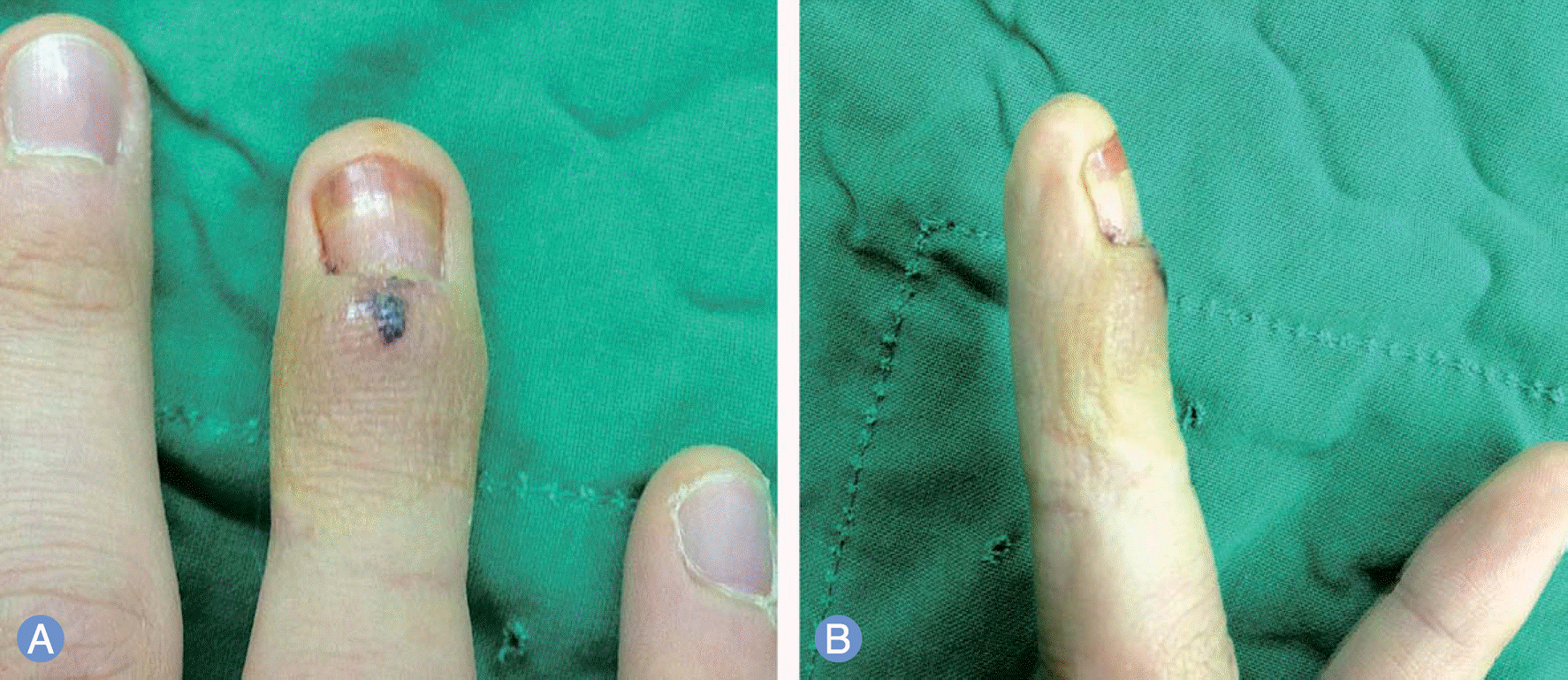
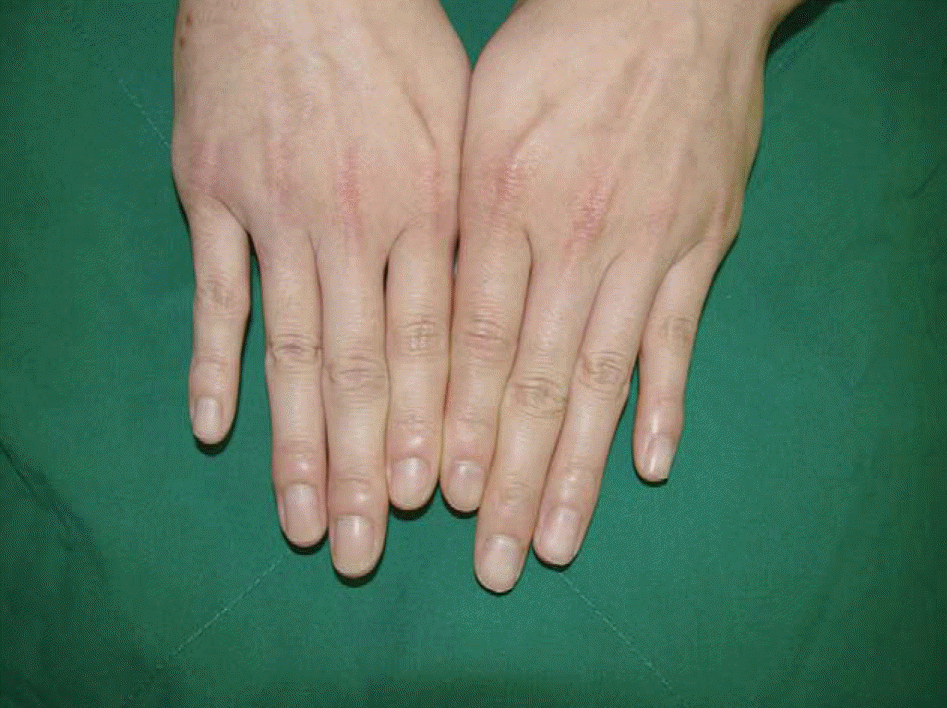
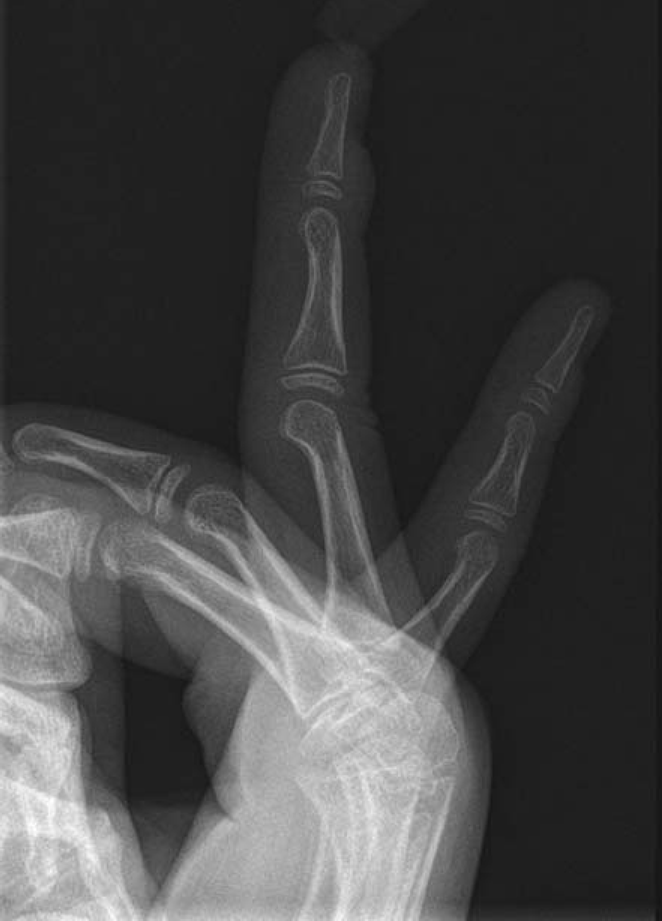
The fingernail is damaged and deformed by various causes such as crushing, laceration, avulsion injury, infection, tumor and personal habit. The growth disturbance of nail plate may be caused by systemic diseases or trauma without a direct injury of the fingernail and is usually found in accident. We experienced abnormal growth of nail plate in four patients with previous fractures of metacarpal bone. At about 8 weeks after trauma, a swelling and tenderness on the eponychium and a growth disturbance of affected nail plates occurred. All affected fingernails were treated with the nail extraction. The authors report four cases of growth disturbance of nail plates which obtained the satisfactory results by using the nail extraction.
REFERENCES
1. Brown RE. Acute nail bed injuries. Hand Clin. 2002; 18:561–75.

2. Brown RE, Zook EG, Russell RC. Fingertip reconstruction with flaps and nail bed grafts. J Hand Surg Am. 1999; 24:345–51.
3. Zook EG, Guy RJ, Russell RC. A study of nail bed injuries: causes, treatment, and prognosis. J Hand Surg Am. 1984; 9:247–52.
4. Wegener EE, Johnson WR. Identification of common nail and skin disorders. J Hand Ther. 2010; 23:187–97.
5. Sommer NZ, Brown RE. The perionychium. Wolfe SW, Robert NH, David PG, editors. Green's operative hand surgery. Philadelphia, PA: Elsevier Churchill Livingstone;2011. p. 333–53.
6. Ben-Dayan D, Mittelman M, Floru S, Djaldetti M. Transverse nail ridgings (Beau's lines) induced by chemotherapy. Acta Haematol. 1994; 91:89–90.
7. Hinds G, Thomas VD. Malignancy and cancer treatment-related hair and nail changes. Dermatol Clin. 2008; 26:59–68.
8. Harford RR, Cobb MW, Banner NT. Unilateral Beau's lines associated with a fractured and immobilized wrist. Cutis. 1995; 56:263–4.
9. Ward DJ, Hudson I, Jeffs JV. Beau's lines following hand trauma. J Hand Surg Br. 1988; 13:411–4.
10. Zook EG. Anatomy and physiology of the perionychium. Hand Clin. 2002; 18:553–9.
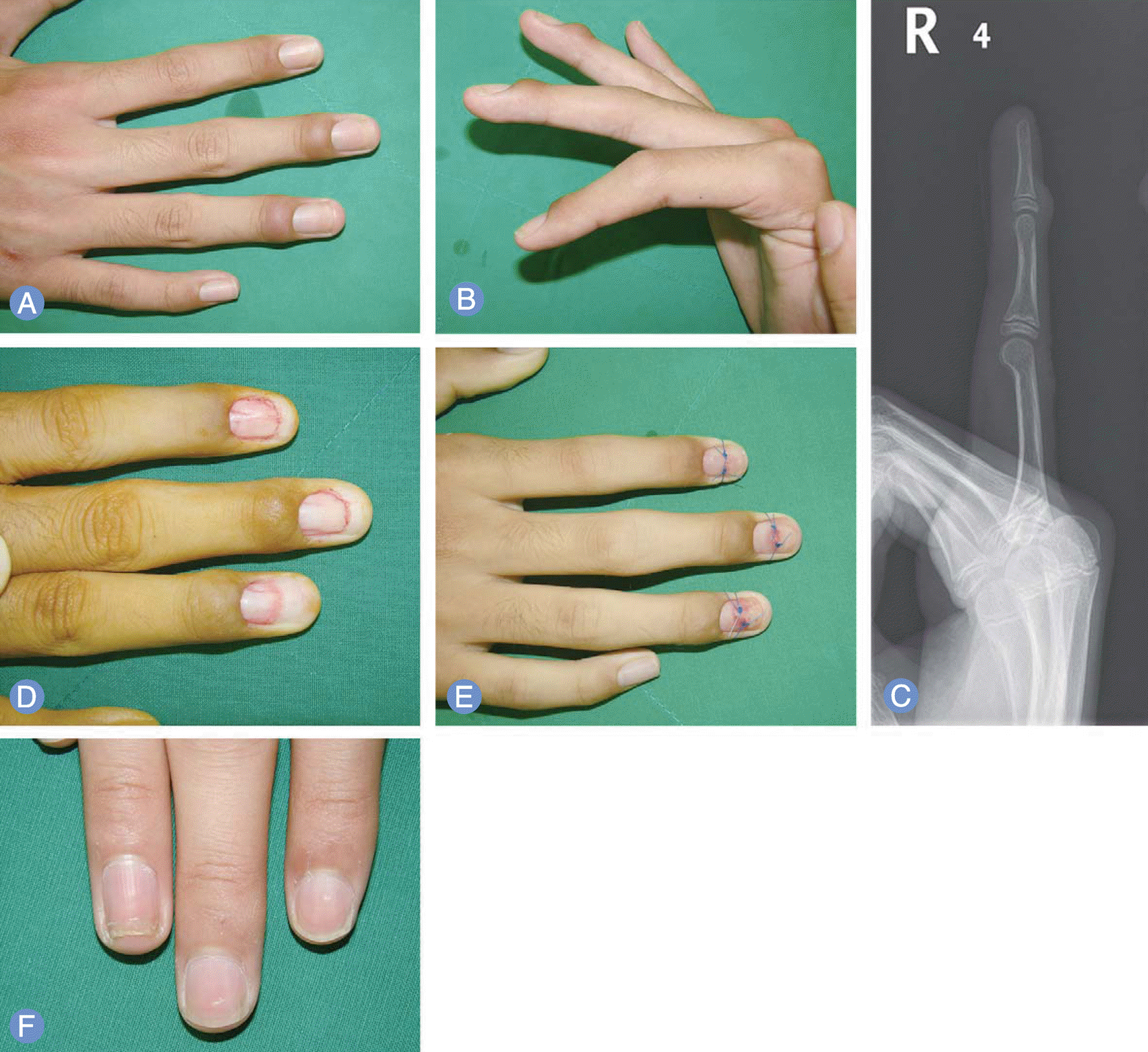
Fig. 1.
(A, B) Right second/third/fourfh finger showing about 2-3 mm color change on distal end of nail plate and a swelling of eponychium. (C) Lateral radiograph seen a soft tissue swelling on dorsum of distal interphalangeal joint. (D) After the extraction of nail plate, dis-colored lesions were found in the distal end of nail bed. (E) Nail plates were repositioned and stabilized using a 4-0 nylon suture. (F) Appearance showing a normal regrowth of nail plate.
 XML Download