



 PDF
 ePub
 Citation
 Print


Abstract
Purpose
To compare the preterm birth (PTB) by length of first birth interval (LFBI) in singleton birth among primiparous women.
Methods
Data from the 2010-2013 birth certification of Korea Statistics (718,103 singleton first births) was used. Extra-marital birth, teenage birth, non-hospital birth cases, pre-marital pregnancy (shotgun birth) cases, and missing information (year and month of marriage, gestational age) were excluded from the data. Odds ratio and 95% confidence intervals were calculated from multinomial logistic regression analyses to describe the associations between the LFBI and the risk of PTB.
Results
The mean LFBI from marriage to first birth was 24.4 months. The frequency of LFBI was 29.7 percent in LFBI of 8-12 months, 38.1 percent in 13-24 months, 22.7 percent in 25-48 months, 3.8 percent in 49-60 months, and 5.7 percent in ≥61 months. The rate of PTB was increased with prolonged LFBI. The incidence of PTB by LFBI was 3.9 percent in the LFBI of 8-24 months, 4.3 percent in 25-48 months, and 5.8 percent in ≥49 months. The odds ratio of PTB for the LFBI of ≥49 months was 1.327 (95% confidence interval: 1.299-1.427), compared with the LFBI of 8-24 months. The odds ratio of PTB was 1.695 (1.598-1.798) in women aged 35 and older with the LFBI of ≥49 months, as compared to women aged under 34 years with the LFBI of ≥8-24 months.
Figures and Tables
Table 1
General Characteristics of Singleton Birth among Primiparous Women in Korea, 2010-2013
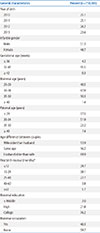
Table 2
Odds Ratio of Preterm Birth by First Birth Interval of Singleton Birth among Primiparous Women in Korea, 2010-2013
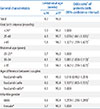
Table 3
Odds Ratio of Preterm Birth by First Birth Interval and Maternal Age of Singleton Birth among Primiparous Women in Korea, 2010-2013
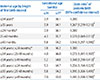
*Reference group.
†P<0.01.
‡Odds ratio: logistic regression adjusted by maternal occupation (none=1, yes=0), education (≤middle=1, High=2, college/university=3), paternal age (25, 30, 35, 40), age difference between couples (husband older than wife=0, same age=1, wife older than husband=1), infantile gender (male=1, female=0), and birth year (2010-2013).
References
1. Matthews TJ, Hamilton BE. Delayed childbearing: more women are having their first child later in life. National Center for Health Statistics Data Brief 21:1-8. Hyattsville. MD: National Center for Health Statistics;2009.
2. Kim TH. Age at first marriage and birth intervals in Korea. Bull Popul Dev Stud Cent. 1982; 11:1–14.
3. Kong SK, Park IH, Cho AJ, Kim JS, Chang HS. Family transition in Korea. Korea Institute for Population and Health;1987. p. 151–152.
4. Mutsaerts MA, Groen H, Huiting HG, Kuchenbecker WK, Sauer PJ, Land JA, et al. The influence of maternal and paternal factors on time to pregnancy-a Dutch population-based birth-cohort study: the GECKO Drenthe study. Hum Reprod. 2012; 27:583–593.

5. Tough SC, Siever JE, Jack M. Reproductive assistance, emotional health, obesity, and time to pregnancy among women under 35 years of age. J Obstet Gynaecol Can. 2010; 32:1153–1162.
6. Axmon A, Rylander L, Albin M, Hagmar L. Factors affecting time to pregnancy. Hum Reprod. 2006; 21:1279–1284.
7. Shayan Z, Ayatollahi SM, Zare N, Moradi F. Prognostic factors of first birth interval using the parametric survival models. Iran J Reprod Med. 2014; 12:125–130.
8. Schmidt L, Sobotka T, Bentzen JG, Nyboe Andersen A. ESHRE Reproduction and Society Task Force. Demographic and medical consequences of the postponement of parenthood. Hum Reprod Update. 2012; 18:29–43.
9. Wise LA, Mikkelsen EM, Sørensen HT, Rothman KJ, Hahn KA, Riis AH, et al. Prospective study of time to pregnancy and adverse birth outcomes. Fertil Steril. 2015; 103:1065–1073.e2.
10. Raatikainen K, Harju M, Hippeläinen M, Heinonen S. Prolonged time to pregnancy is associated with a greater risk of adverse outcomes. Fertil Steril. 2010; 94:1148–1151.
11. Joffe M, Li Z. Association of time to pregnancy and the outcome of pregnancy. Fertil Steril. 1994; 62:71–75.
12. Nohr EA, Vaeth M, Rasmussen S, Ramlau-Hansen CH, Olsen J. Waiting time to pregnancy according to maternal birthweight and prepregnancy BMI. Hum Reprod. 2009; 24:226–232.
13. Pinborg A, Wennerholm UB, Romundstad LB, Loft A, Aittomaki K, Söderström-Anttila V, et al. Why do singletons conceived after assisted reproduction technology have adverse perinatal outcome? Systematic review and meta-analysis. Hum Reprod Update. 2013; 19:87–104.
14. Kim TH, Kim DS, Kim EJ, Bae HJ, Min HJ. A study on the effect of late marriage on low fertility in Korea. The Korea Institute for Health and Social Affairs;2011. p. 137–142.
15. Lee SB, Park BT, Choi S. An analysis of fertility for premarital pregnant women. J Fam Plan Stud (Korea Inst Fam Plan). 1978; 5:7–28.
16. Kim YI, Kim PG. Impact of pre-marital pregnancy on birth outcome: evidence from South Korea. Korea Rev Appl Econ. 2012; 14:209–238.
17. O'Connell M, Moore MJ. The legitimacy status of first births to U.S. women aged 15-24, 1939-1978. Fam Plann Perspect. 1980; 12:17–25.
18. O'Connell M, Rogers CC. Out-of-wedlock births, premarital pregnancies and their effect on family formation and dissolution. Fam Plann Perspect. 1984; 16:157–162.
19. Akerlof GA, Yellen JL, Katz ML. An analysis of out of wedlock childbearing in the United States. Q J Econ. 1996; 111:277–317.
20. Axmon A, Hagmar L. Time to pregnancy and pregnancy outcome. Fertil Steril. 2005; 84:966–974.
21. Gray RH, Wu LY. Subfertility and risk of spontaneous abortion. Am J Public Health. 2000; 90:1452–1454.
22. Hure AJ, Powers JR, Mishra GD, Herbert DL, Byles JE, Loxton D. Miscarriage, preterm delivery, and stillbirth: large variations in rates within a cohort of Australian women. PLoS One. 2012; 7:e37109.
23. Shah PS, Zao J. Induced termination of pregnancy and low birth weight and preterm birth: a systematic review and meta-analysis. BJOG. 2009; 116:1425–1442.
24. van Oppenraaij RH, Jauniaux E, Christiansen OB, Horcajadas JA, Farquharson RG, Exalto N. Predicting adverse obstetric outcome after early pregnancy events and complications: a review. Hum Reprod Update. 2009; 15:409–421.
25. Klemetti R, Gissler M, Niinimäki M, Hemminki E. Birth outcomes after induced abortion: a nationwide register-based study of first births in Finland. Hum Reprod. 2012; 27:3315–3320.
26. Basso O, Baird DD. Infertility and preterm delivery, birthweight, and caesarean section: a study within the Danish national birth cohort. Hum Reprod. 2003; 18:2478–2484.
27. Henriksen TB, Baird DD, Olsen J, Hedegaard M, Secher NJ, Wilcox AJ. Time to pregnancy and preterm delivery. Obstet Gynecol. 1997; 89:594–599.
28. Park SH, Lim DO. Secular trends of incidence of late preterm in Korea: 1995-2012. J Korean Soc Matern Child Health. 2014; 18:209–217.
29. Park SH, Lim DO. Trends of gestational length distribution in Korean singleton birth: 1998-2009. Korean Public Health Researches. 2011; 37:57–62.
 XML Download