



 PDF
 ePub
 Citation
 Print


Introduction
Prolonged consumption of excessive amounts of alcohol alters folate metabolism in the liver (Horne et al., 1978; Min et al., 2005; Tamura & Halsted, 1983). Recently, we showed that ethanol feeding decreases 10-formyltetrahydrofolate dehydrogenase (FDH; EC 1.5.1.6.) activity in rat liver and suggested that the inhibition of FDH appears to explain partly a defect of folate metabolism elicited by chronic ethanol ingestion (Im et al., 1998; Min et al., 2005).
FDH is an enzyme that catalyzes the oxidation of formyl group of 10-formyltetrahydrofolate (10-FTHF) to CO2 in an NADP+-dependent dehydrogenase reaction or an NADP+-independent hydrolase reaction (Kutzbach & Stokstad, 1971). The enzyme is also known as an abundant high affinity folate-binding protein in liver (Cook & Wagner, 1995; Min et al., 1988), a multi-domain enzyme consisting of three domains (Cook et al., 1991; Krupenko et al., 1997), and protein-arginine N-methyltransferase activity (Kim et al., 1998). The NADP+-independent hydrolase reaction occurs in N-terminal domain of FDH, converting to 10-formyl THF to THF and formate, whereas the C-terminal domain is aldehyde dehydrogenase-homologous enzyme capable of NADP+-dependent oxidation (Krupenko et al., 1997). Recently, Donato et al. (2008) demonstrated the intermediate domain of FDH as a member of the group of carrier protein with a 4'-phosphopantetheine swinging arm, transferring formyl group between two catalytic domains.
Many of the effects caused by the action of ethanol are actually mediated by its metabolites, namely acetaldehyde and acetate (Israel et al., 1994; Kenyon et al., 1998). Ethanol is metabolized, via three metabolic pathways, to acetaldehyde and to acetate in liver: the cytosolic enzymes alcohol dehydrogenase (ADH) and aldehyde dehydrogenase, the microsomal ethanol oxidizing system (MEOS: cytochrome P450 2E1) and catalase in both peroxisomes and mitochondria (Agarwal, 2001). Generally, acetaldehyde is formed by the action of ADH in liver. However, when ethanol is chronically ingested, cytochrome P450 2E1 (CYP2E1) pathway is induced (Lieber, 1990) and produces much higher concentrations of acetaldehyde (Eriksson & Sippel, 1977). Thus, CYP2E1 induction explains the tolerance to alcohol seen in alcoholics as well (Lieber, 1990).
Since decreased FDH activity in vivo by chronic ethanol feeding has been implicated as a toxic effect of ethanol and the action of ethanol may originate from ethanol itself or its metabolites including acetaldehyde and acetate, we investigated the mechanism of this inhibition further in vitro. In this study, purified rat liver FDH was used to test in vitro effect of ethanol and its metabolites, acetaldehyde and acetate, in time- and dose-dependent studies. During this investigation, we found that acetaldehyde inhibited FDH whereas ethanol itself did not inhibit the enzyme.
Materials and Methods
Materials
Sephacryl S-300, DEAE-Sephadex A-50 and Blue Sepharose 6 Fast Flow were obtained from Amersham Biosciences (Piscataway, NJ, USA). Ethanol, acetaldehyde and acetate were purchased from Merck (Whitehouse Station, NJ, USA). Bradford's reagent was obtained from Bio-Rad (Hercules, CA, USA) and [6RS]-10-formyltetrahydrofolate was prepared fresh daily from [6RS]-5-formyltetrahydrofolate from Sigma (St. Louis, MO, USA). All chemicals were of the highest purity commercially available.
Purification of 10-formyltetrahydrofolate dehydrogenase
Rat livers were removed from Sprague-Dawley rats weighing 250~280 g. FDH was purified from rat liver by the procedure of Scrutton and Beis (1979) with slight modification. Briefly, the liver homogenate was chromatographed on Sephacryl S-300, followed by DEAE-Sephadex A-50active enzyme fractions were then pooled and further purified by Blue Sepharose 6 Fast Flow chromatography. Enzyme with specific activity 0.5 µmol/min/mg protein was used in this study.
Assay of 10-formyltetrahydrofolate dehydrogenase and hydrolase activities
The activity of FDH dehydrogenase was assayed by the procedure of Kutzbach and Stokstad (1971). Assay reaction mixtures (total 2 mL) contained 50 mM Tris-HCl, pH 7.7, 100 mM 2-mercaptoethanol, 100 µM NADP+, 75 µM [6RS]-10-FTHF, and aliquots of ethanol, acetate, or acetaldehyde when required, plus the enzyme source. Incubations (30℃) were performed for 3 min and the reaction was terminated by cooling the assay mixture in ice-water bath. The formation of THF was monitored by measuring the increase in A300nm produced by the conversion of 10-FTHF to THF. A millimolar extinction coefficient (corrected for the contribution of NADPH) of 22.6 cm-1 was used. Readings were measured against reaction solutions containing no enzyme or no substrate. The activity of FDH hydrolase was assayed by the same methods as FDH dehydrogenase assay in the absence of NADP+.
Protein assay
Protein concentration was determined according to the method of Bradford (1976) using bovine serum albumin as a standard. The absorbance at 280 nm was used to monitor protein in the column effluents.
Inhibition studies for FDH activity by ethanol, acetaldehyde and acetate
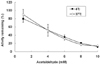
Purified enzyme was preincubated in 50 mM Tris-HCl buffer, pH 7.7 in the presence or absence of ethanol, acetaldehyde or acetate to test for enzyme inhibition. Preliminary experiments were carried out to establish optimal conditions. To determine the percentage inhibition, FDH activities from the compoundincubated mixtures were compared to control assays containing equivalent enzyme concentrations in the absence of the compounds. The time-dependent effect of acetaldehyde on FDH activity was analyzed by incubating the purified enzyme in the presence of 2 or 6 mM acetaldehyde at 4℃ for up to 2 hr. The concentrations of acetaldehyde were chosen because free acetaldehyde levels in liver is reported as 250 µM in rats administered ethanol orally (Eriksson & Sippel, 1977) and some acetaldehyde is bound to proteins in liver, so in vivo hepatic acetaldehyde concentrations may be higher than these values. Blood acetaldehyde concentrations are higher in the rat than in humans (Kenyon et al., 1998). Since inhibitory activities of acetaldehyde on the dehydrogenase activity of FDH at 4℃ were similar at 37℃ (Fig. 1) and acetaldehyde is volatile, we incubated the enzyme with the agents at 4℃. The hepatic ethanol concentrations were observed as up to 50 mM (Eriksson & Sippel, 1977).
Acetaldehyde solutions were prepared and stored on ice to avoid loss of the material and incubation was performed in light-protected tubes with stoppers. The concentrations of acetaldehyde producing 50% inhibition of the enzyme activity (IC50) was calculated from the least-squares regression line of the logarithmic concentrations plotted the remaining activity.
Results
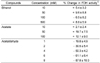
The dehydrogenase activity of purified rat liver FDH was tested in the presence of ethanol, acetate, or acetaldehyde (Table 1). When FDH was incubated with ethanol for 30 min at 4℃, ethanol had no significant effect on the dehydrogenase activity at concentrations between 10 and 500 mM. However, the dehydrogenase activity was slightly increased in the presence of acetate with concentrations between 10 and 100 mM, possibly reflecting the buffering capabilities of acetate. In contrast to ethanol and acetate, acetaldehyde was found to reduce the dehydrogenase activity of FDH in a concentration dependent way with concentrations between 1 mM and 8 mM acetaldehyde at 4℃ (Table 1). As shown in Fig. 1, acetaldehyde reduced the dehydrogenase activity of FDH at 37℃ similar to at 4℃ (Fig. 1).
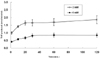
The inhibitory effects of acetaldehyde on the dehydrogenase activity of FDH were plotted over 120-min time course in Fig. 2. When FDH was incubated in the presence of 2 mM or 6 mM acetaldehyde at 4℃, acetaldehyde reduced the dehydrogenase activity of FDH immediately and the inhibition developed in full within 120 min in this experimental condition (Fig. 2). The dehydrogenase activities of FDH observed in the presence of 6 mM acetaldehyde were approximately 40 to 60% lower than the activities observed at 2 mM acetaldehyde during 120 min.
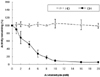
The effect of various concentrations of acetaldehyde on the dehydrogenase and hydrolase activity of FDH was investigated with purified rat liver enzyme. The purified enzyme was incubated with 0 to 20 mM acetaldehyde for 30 min at 4℃ and the enzyme activities were measured (Fig. 3). Acetaldehyde reduced the dehydrogenase activity of FDH with an apparent IC50 of 4 mM. When higher concentration of acetaldehyde (≥10 mM) was utilized, the enzyme activity was nearly completely inactivated. In contrast to the inhibitory effect on the dehydrogenase activity of FDH, acetaldehyde had essentially no effect on the rate of hydrolase activity of FDH with concentrations up to 20 mM as determined by production of THF at 300 nm in the absence of NADP+ under standard assay conditions (Fig. 3).
Discussion
Ethanol has long been known to have hepatotoxic effects, even at relatively low doses. Oxidation of ethanol produces acetaldehyde, a highly reactive compound that may contribute to the toxic effect of ethanol in liver (Diehl, 2002; Neuman et al., 2001). The enzymes that are believed to be primarily responsible for the oxidation of ethanol are alcohol dehydrogenase, catalase, and cytochrome P450 2E1 (CYP2E1) (Agarwal, 2001; Oneta et al., 2002).
It has been extensively documented that in vivo inhibition of methionine synthase induced by ethanol plays a critical role in hepatotoxicity and the administration of ethanol depletes hepatic S-adenosylmethionine which protects the liver from ethanol-induced fatty infiltration (Barak et al., 2001; Barak et al., 2003). In vitro study with rat liver methionine synthase has demonstrated that inactivation of methionine synthase was induced by acetaldehyde and ethanol did not inhibit methionine synthase directly (12) (Kenyon et al., 1998).
We recently observed that chronic ethanol ingestion decreased the hepatic activities of FDH by 46% in rats fed folate-sufficient diets and by 79% in rats fed folate-deficient diets compared to the ethanol-free diet groups (Im et al., 1998; Min et al., 2005). The physiological importance of FDH is established as an abundant folate-binding protein in liver cell (Cook & Wagner, 1995; Min et al., 1988) and a multifunctional enzyme that has three catalytic activities: 1) the NADP+-dependent oxidation of 10-FTHF, 2) the NADP+-independent hydrolysis of 10-FTHF, and 3) the NADP+-dependent oxidation of propanal (Cook et al., 1991; Schirch et al., 1994). In the present study, ethanol, its metabolites acetaldehyde, and acetate were tested to determine their effects on purified rat liver FDH in vitro. Our results demonstrated that acetaldehyde reduced the dehydrogenase activity of FDH whereas ethanol and acetate did not induce any significant inhibition.
The ability of acetaldehyde to inhibit FDH dehydrogenase activity was investigated over time-course by incubating FDH with 2 mM or 6 mM acetaldehyde (Fig. 2). The time-dependent experiment revealed that the dehydrogenase activity was inactivated within 1 min, which indicated that the interaction between FDH and acetaldehyde may occur immediately. Dose-dependent study showed that the IC50 for the interaction of FDH and acetaldehyde was 4 mM. However, this concentration is not physiologically relevant concentration because free acetaldehyde concentration in rat is reported as 250 nmol/g in liver and 150 µM in the blood (Eriksson & Sippel, 1977). However, the actual concentrations in our in vitro system may be much lower than our reported values because acetaldehyde is highly volatile. Furthermore, it is not uncommon to use such concentrations in the in vitro studies (Blasiak et al., 2000; Kenyon et al., 1998; Rouach et al., 2005). Thus it may be reasonable to assume that this kind of in vitro assay could represent an acute treatment for a short time although the in vitro data cannot be directly extrapolated to the in vivo situation (Hard et al., 2001). On the other hand, the higher concentrations of acetaldehyde can be achieved by induction of chytochrome P450 2E1 when ethanol is chronically ingested (Agarwal, 2001; Oneta et al., 2002).
We found that hepatic FDH dehydrogenase activity was reduced by acetaldehyde in vitro but hydrolase activity was apparently not affected by acetaldehyde in vitro (Fig. 3). This observation was different from previous reports in which both dehydrogenase and hydrolase activities of FDH were reduced by chronic ethanol consumption in rats (Im et al., 1998; Min et al., 2005). Since hydrolase reaction of FDH produces THF when hepatic NADP+ levels are low, the hydrolase reaction is proposed as the enzymatic activity used to produce THF irrespective of the redox state of the cell (Rios-Orlandi et al., 1986). However, Krupenko et al. (1995) reported that the hydrolase reaction requires millimolar concentrations of β-mercaptoethanol (β-ME) in vitro while the dependence of the hydrolase reaction on β-ME is speculated to be unlikely in vivo. Therefore, although it is not clear at present why hydrolase reaction is not affected by acetaldehyde in vitro, high level of β-ME in assay media may result in essentially no change in the hydrolase activity in the presence of acetaldehyde in this study.
Although we are unaware of the mechanism how acetaldehyde inhibits FDH, there is increasing evidence that the development of alcohol-related toxicity may involve the formation of protein adducts, which are post-translational modified proteins formed by covalent linkage of acetaldehyde to proteins (Donohue et al., 1983; Worrall & Thiele, 2001). In alcohol toxicity, it was suggested that protein adducts may perturb tissue metabolism by inactivating the affected proteins (Chen et al., 2000), and the affected proteins are more susceptible to proteolysis (Nicholls et al., 1994). Pumford et al. (1997) showed that covalent binding of high dose of acetaminophen to FDH was toxic to liver and proposed that the acetaminophen reactive metabolite may bind to sulfhydryl groups of an essential cysteine (cys-707) at the active site of the enzyme. Because FDH has an essential cysteine (cys-707) at the active site (Cook & Wagner, 1995), conversion of cys-707 to alanine in FDH by site-directed mutagenesis led to a complete loss of NADP+-dependent dehydrogenase (Krupenko et al., 1995).
The results of present study show that ethanol does not inhibit FDH directly and acetaldehyde inhibits FDH activity, providing an explanation for the observed inhibition of FDH activity by chronic administration of ethanol to rats. How acetaldehyde decreases the enzyme activity and plays a role in ethanol hepatotoxicity remains to be investigated further.

 XML Download