



 PDF
 ePub
 Citation
 Print


Abstract
Purpose
This study was conducted to evaluate, with using the 2-year follow-up data, the clinical efficacy and safety of performing photoselective vaporization of the prostate (PVP) for the treatment of symptomatic benign prostatic hyperplasia (BPH).
Materials and Methods
We analyzed the clinical data of 104 men with symptomatic BPH and who had undergone PVP. The efficacy parameters were the changes from baseline of the International Prostate Symptom Score (IPSS), the quality of life (QoL) score, the maximum urinary flow rate (Qmax) and the postvoid residual volume (PVR). The patients were evaluated preoperatively and then at post-operative 1, 3, 6, 12 and 24 months. Their complications were also evaluated.
Results
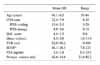
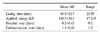
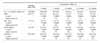
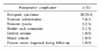
The mean prostate volume was 45.6ml. The mean lasing time was 44.9 minutes and there was no significant blood loss or fluid absorption during or immediately after PVP. Significant improvements in the IPSS, the QoL score, the Qmax and the PVR were noted as early as 1 month after PVP treatment. After 24-month follow-up, the mean IPSS decreased from 22.4 to 9.9 (p < 0.0001) and the QoL score decreased from 4.4 to 2.3 (p < 0.0001), while the mean Qmax changed from 8.3 to 14.4ml/sec (p < 0.0001). The PVR decreased from 82.0 to 49.9ml (p=0.033). The complications were retrograde ejaculation (26.9%), transient catheterization (6.7%), transient dysuria (2.9%), bladder neck contracture (1.9%), urethral stricture (0.9%) and meatal stenosis (0.9%). 1 patient was diagnosed with prostate cancer 32 months after operation.
Figures and Tables

References
1. Wasson JH, Reda DJ, Bruskewitz RC, Elinson J, Keller AM, Henderson WG. A comparison of transurethral surgery with watchful waiting for moderate symptoms of benign prostatic hyperplasia. The Veterans Affairs Cooperative Study Group on Transurethral Resection of the Prostate. N Engl J Med. 1995. 332:75–79.
2. Borboroglu PG, Kane CJ, Ward JF, Roberts JL, Sands JP. Immediate and postoperative complications of transurethral prostatectomy in the 1990s. J Urol. 1999. 162:1307–1310.
3. Rassweiler J, Teber D, Kuntz R, Hofmann R. Complications of transurethral resection of the prostate (TURP)--incidence, management, and prevention. Eur Urol. 2006. 50:969–979.
4. Reich O, Gratzke C, Stief CG. Techniques and long-term results of surgical procedures for BPH. Eur Urol. 2006. 49:970–978.
5. Te AE. The development of laser prostatectomy. BJU Int. 2004. 93:262–265.
6. Malek RS, Kuntzman RS, Barrett DM. High power potassium-titanyl-phosphate laser vaporization prostatectomy. J Urol. 2000. 163:1730–1733.
7. Te AE, Malloy TR, Stein BS, Ulchaker JC, Nseyo UO, Hai MA, et al. Photoselective vaporization of the prostate for the treatment of benign prostatic hyperplasia: 12-month results from the first United States multicenter prospective trial. J Urol. 2004. 172:1404–1408.
8. Bachmann A, Schurch L, Ruszat R, Wyler SF, Seifert HH, Muller A, et al. Photoselective vaporization (PVP) versus transurethral resection of the prostate (TURP): a prospective bi-centre study of perioperative morbidity and early functional outcome. Eur Urol. 2005. 48:965–971.
9. Hwang EC, Joo JS, Min KD, Oh BR, Kang TW, Kwon DD, et al. A short-term comparative study on efficacy and safety of standard transurethral resection and high power (80W) potassium-titanyl-phosphate laser vaporization of the prostate. Korean J Urol. 2005. 46:1251–1255.
10. Park JS, Min GE, You CH, Hong B, Kim CS, Ahn H, et al. Comparison of treatment outcomes between photoselective vaporization and transurethral resection of the prostate for benign prostatic hyperplasia. Korean J Urol. 2007. 48:297–303.
11. Malek RS, Kuntzman RS, Barrett DM. Photoselective potassium-titanyl-phosphate laser vaporization of the benign obstructive prostate: observations on long-term outcomes. J Urol. 2005. 174:1344–1348.
12. Kuntzman RS, Malek RS, Barrett DM, Bostwick DG. Potassium-titanyl-phosphate laser vaporization of the prostate: a comparative functional and pathologic study in canines. Urology. 1996. 48:575–583.
13. Reich O, Bachmann A, Schneede P, Zaak D, Sulser T, Hofstetter A. Experimental comparison of high power (80W) potassium titanyl phosphate laser vaporization and transurethral resection of the prostate. J Urol. 2004. 171:2502–2504.
14. Barber NJ, Muir GH. High-power KTP laser prostatectomy: the new challenge to transurethral resection of the prostate. Curr Opin Urol. 2004. 14:21–25.
15. Hwang CH, Cho CK, Lee YK, Hong SJ. Comparative analysis of short-term efficacy and complication of photoselective vaporization for benign prostatic hyperplasia which was classified by prostate size. Korean J Urol. 2007. 48:826–831.
16. Sandhu JS, Ng C, Vanderbrink BA, Egan C, Kaplan SA, Te AE. High-power potassium-titanyl-phosphate photoselective laser vaporization of prostate for treatment of benign prostatic hyperplasia in men with large prostates. Urology. 2004. 64:1155–1159.
17. Rajbabu K, Chandrasekara SK, Barber NJ, Walsh K, Muir GH. Photoselective vaporization of the prostate with the potassium-titanyl-phosphate laser in men with prostates of >100ml. BJU Int. 2007. 100:593–598.
18. Lee J, Kang SH, Kim JJ. Evaluation of the quality of life and the efficacy of treatment after high power potassium-titanyl-phosphate (KTP) laser vaporization for patients with a prostate volume greater than 40cc. Korean J Urol. 2007. 48:956–964.
19. Te AE, Malloy TR, Stein BS, Ulchaker JC, Nseyo UO, Hai MA. Impact of prostate-specific antigen level and prostate volume as predictors of efficacy in photoselective vaporization prostatectomy: analysis and results of an ongoing prospective multicentre study at 3 years. BJU Int. 2006. 97:1229–1233.
 XML Download