



 PDF
 ePub
 Citation
 Print


Abstract
Purpose
We examined the effect of lowering prostate-specific antigen (PSA) threshold on the number of Korean men requiring a prostate biopsy.
Materials and Methods
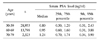
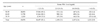
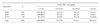
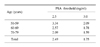
We evaluated men who had serum PSA levels tested at routine physical check-ups between 1999 and 2005 at 11 domestic hospitals. Men with PSA ≥ 10ng/ml or patients with prostate cancer were excluded. A total of 45,074 men (aged 50 to 79 years) were enrolled and split into three age groups: 50-59 years, 60-69 years, and 70-79 years. For each age group, we calculated the number and proportion of men whose PSA level exceeded potential biopsy thresholds: 2.5ng/ml, 3.0ng/ml, and 4.0ng/ml. Results were extrapolated to the 4.992 million men older than 50 years old, or 21.3% of the Korean male population in 2005.
Results
The number of biopsy candidates at the threshold of 4.0ng/ml, 3.0ng/ml, and 2.5ng/ml were 1,321 (2.9%), 2,248 (5.4%), and 3,577 (7.9%), respectively. Extrapolating to the male population in Korea, lowering the PSA threshold from 4.0ng/ml to 3.0 or 2.5ng/ml would increase the number of men needing biopsy by 1.75 and 2.49 times, respectively.
Figures and Tables
References
1. Catalona WJ, Smith DS, Ratliff TL, Todds KM, Coplen DE, Yuan JJ, et al. Measurement of prostate-specific antigen in serum as a screening test for prostate cancer. N Engl J Med. 1991. 325:963–965.
2. Catalona WJ, Ramos CG, Carvalhal GF, Yan Y. Lowering PSA cutoffs to enhance of curable prostate cancer. Urology. 2000. 55:791–795.
3. Vis AN, Kranse R, Roobol M, van der Kwast TH, Schroder FH. Serendipity in detecting diesease in low prostate-specific antigen ranges. BJU Int. 2002. 89:384–389.
4. de Koning HJ, Auvinen A, Berenguer Sanchez A, Calais da Silva F, Ciatto S, Denis L, et al. Large-scale randomized prostate cancer screening trials: program performances in the European Randomized Screening for Prostate Cancer trial and the Prostate, Lung, Colorectal and Ovary cancer trial. Int J Cancer. 2002. 97:237–244.
5. Postma R, Schroder FH. Screening for prostate cancer. Eur J Cancer. 2005. 41:825–833.
6. Oesterling JE, Kumamoto Y, Tsukamoto T, Girman CJ, Geuss HA, Masumori N, et al. Serum prostate-specific antigen in a community-based population of healthy Japanese men: lower values than for similarly aged white men. Br J Urol. 1995. 75:347–353.
7. Ku JH. Race-specific reference ranges of serum prostate-specific antigen levels in countries with a low incidence of prostate cancer. BJU Int. 2006. 97:69–72.
8. Chung BH, Hong SJ, Cho JS, Seong DH. Relationship between serum prostate-specific antigen and prostate volume in Korean men with benign prostatic hyperplasia: a multicenter study. BJU Int. 2006. 97:742–746.
9. Roehrborn CG, Boyle P, Gould Al, Waldstreicher J. Serum prostate-specific antigen as a predictor of prostate volume in men with benign prostatic hyperplasia. Urology. 1999. 53:581–589.
10. Hochberg DA, Armenakas NA, Fracchia JA. Relationship of prostate-specific antigen and prostate volume in patients with biopsy proven benign prostatic hyperplasia. Prostate. 2000. 45:315–319.
11. Cho JS, Kim CI, Seong DH, Kim HS, Kim YS, Kim SJ, et al. Cut-off point of large prostate volume for the patients with benign prostatic hyperplasia. Korean J Urol. 2005. 46:1246–1250.
12. Cho JS. Optimal prostate-specific antigen cutoff value in Korean. Korean J Urol Oncol. 2007. 5:1–5.
13. Park SK, Sakoda LC, Kang D, Chokkalingam AP, Lee E, Shin HR, et al. Rising prostate cancer rates in South Korea. Prostate. 2006. 66:1285–1291.
14. Schmid HP, Riesen W, Prikler L. Update on screening for prostate cancer with prostate-specific antigen. Crit Rev Oncol Hematol. 2004. 50:71–78.
15. Yang WJ, Lee DH, Chung BH, Cho JS, Choi YD, Kim SJ, et al. Detection rate of prostate cancer on biopsy according to serum prostate-specific antigen in Korean men: a multicenter study. Urology. 2006. 67:333–336.
16. Crawford ED, Thompson IM. Controversies regarding screening for prostate cancer. BJU Int. 2007. 100:Suppl 2. 5–7.
 XML Download